Women Entrepreneurship in India 2026: Beyond Starting Up
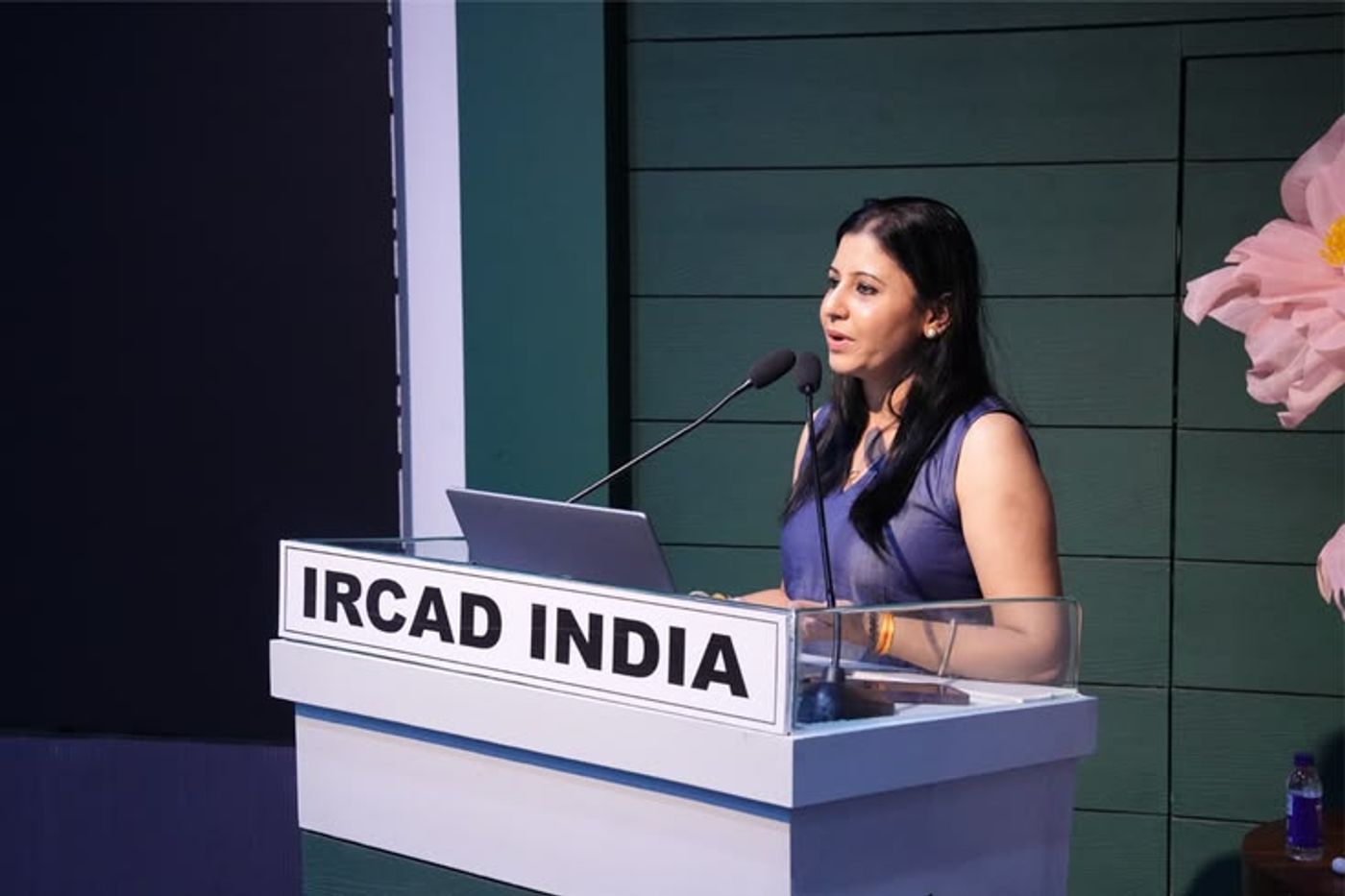
India has never had more women willing to build. The question facing the country in 2026 is no longer whether women can become entrepreneurs. It is whether the economy is prepared to let them become powerful ones.
Every year brings a fresh set of numbers to celebrate. Enterprise registrations rise. Government platforms report new members. Panels are convened, awards are handed out, and the word "empowerment" appears on a great many banners. And yet, walk into any serious investor meeting, any industry body's board room, any list of the fifty most influential founders in a sector, and the pattern repeats itself with a stubbornness that no amount of celebration has managed to dislodge. Women start. Men scale. The gap is not in ambition. It is in architecture.
This is the contradiction India must sit with in 2026. The country has built an extraordinary base of women who choose entrepreneurship as a route to independence, income, and identity. What it has not built, with anywhere near the same energy, is the scaffolding that turns a business into an institution. Capital networks, credibility systems, board access, and the informal channels through which real opportunity travels remain structured around a different kind of founder. Until that changes, participation will keep expanding while ownership of the economy's largest and most valuable companies stays concentrated in familiar hands.
India's Women Entrepreneur Moment Has Arrived
The scale of participation is no longer in question. Millions of women now run enterprises across consumer brands, technology, agriculture, manufacturing, and social ventures, and government platforms have made entrepreneurship a visible, almost expected, career path rather than an exception. NITI Aayog's Women Entrepreneurship Platform has grown into a large national network connecting founders with mentors, training, and market linkages, and its recent research points to a steady rise in women engaging with formal credit and financial systems as their businesses mature. Enterprise data compiled through the country's economic census has for years shown women-owned businesses as a meaningful, if still minority, share of the MSME base, concentrated heavily in services and increasingly present in manufacturing and digital commerce.
None of this should be dismissed. It represents a genuine shift in who sees business ownership as available to them, particularly outside the country's largest cities. But growth statistics of this kind hide a second, less comfortable reality. Most women-led enterprises remain small not because their founders lack capability or appetite, but because scaling a business requires a completely different set of resources than starting one, and those resources are distributed unevenly. A woman can build a profitable, well-run company for a decade and still find herself locked out of the rooms where the next round of capital, or the next major client, or the next public visibility opportunity gets decided. Entry has opened. Advancement has not opened at the same pace.
Starting Is Not the Same as Scaling
This is where the real story of 2026 lives, and it is more structural than motivational. India has made entering entrepreneurship easier than it has ever been. Registration is simpler, digital tools have lowered operating costs, and social attitudes toward women running businesses have softened, particularly in urban and semi-urban India. But the leap from running a business to building an institution asks for a different kind of infrastructure altogether, and this is precisely where the system falls quiet.
Institutional funding beyond the earliest stage remains difficult to secure. Hiring a senior leadership team, rather than relying on founder-led execution, requires credibility with talent markets that still associate authority with a certain kind of founder profile. Expanding into new geographies or categories demands relationships with distributors, regulators, and large enterprise buyers that take years to build and are often inherited rather than earned from scratch. Investor networks, the kind that pass a founder from one fund to the next through warm introductions, tend to move along lines that women are less often part of. And structured mentorship, the sort that helps a founder navigate a board disagreement or a difficult acquisition, is scarcer for women than the abundance of "women's entrepreneurship" programming would suggest.
The difference, in the end, is the difference between a woman running a business and a woman building an institution that outlasts her personal involvement in its daily operations. India has many of the former. It has far fewer of the latter, and the gap between the two is not a gap in talent. It is a gap in what the ecosystem makes available once a founder is ready to grow past a certain size.
The Capital Problem Is Also a Visibility Problem
It has become common to say that women receive less funding, and the figures support this without ambiguity. Industry estimates put the share of India's venture capital flowing to women-led startups in the low single digits, a proportion that has barely moved even as overall startup funding has multiplied many times over. The more useful question is why this persists once merit is no longer a convincing explanation, and the answer sits closer to how investment decisions are actually made than to any deficiency among founders themselves.
Venture capital, at its core, still runs on pattern recognition and informal trust. Investors lean on networks of people they already know, and founders who are visible within those networks are simply easier to evaluate and easier to back. Research on investor behavior has found that founders are frequently asked different kinds of questions depending on gender, with women more often facing "prevention-framed" questions about risk and downside while men are asked "promotion-framed" questions about growth and upside, a pattern that shapes the outcome of a pitch long before the numbers are discussed. Women, on average, also have thinner access to the informal circuits of introductions, board seats, and alumni networks through which capital quietly moves before it ever becomes a public term sheet. Credibility, in other words, is not distributed evenly. It has to be built through different, harder channels when the easier ones are closed off.
Layered on top of the funding gap is an unmet credit gap of a different kind. Analysis by the International Finance Corporation, the World Bank Group's private-sector arm, has estimated the total unmet credit demand of women-owned businesses in India at well over ten billion dollars, a gap rooted not in the creditworthiness of these businesses but in how formal lenders assess and reach them. The capital problem, then, is rarely just a capital problem. It is a trust and visibility problem that finance has not yet learned to solve.
India Has Multiple Women Entrepreneurship Stories
Much of the public conversation around women founders in India narrows quickly to venture-backed technology companies in Bengaluru or Mumbai, and this framing, however well intentioned, leaves out most of the country. The more accurate picture is of at least two distinct entrepreneurship economies running in parallel, each shaped by very different constraints.
In urban India, women founders increasingly compete for venture capital, build technology and professional services companies, and navigate an ecosystem that, while still uneven, at least has the language and infrastructure of scaling built into it. In Tier 2 and Tier 3 India, and across rural regions, the story looks different again. Here, women entrepreneurship shows up through MSMEs, agricultural enterprises, local manufacturing, and increasingly through digital commerce that lets a home-based business reach customers far beyond its immediate district. Government data on non-metro participation has consistently shown strong growth in this segment, often outpacing metro regions in the rate at which women are entering formal financial and credit systems for the first time.
Treating these as a single story leads to policy and capital that fit neither well. A rural manufacturing entrepreneur does not need the same kind of support as a Series A technology founder, and a one-size-fits-all narrative about "women entrepreneurs" tends, in practice, to serve the most visible segment while leaving the largest segment under-resourced.
The New Founder Advantage: Expertise, Networks, and Visibility
If the underlying problem is one of credibility and access rather than capability, then visibility stops being a vanity metric and becomes something closer to infrastructure. A founder who is known within her industry, who is invited to speak, who is quoted, referenced, and consulted, is not simply building a personal brand. She is building the very network effects that determine whether the next customer trusts her, whether the next investor takes the meeting seriously, and whether the next partnership gets offered to her rather than assumed to belong to someone else.
This is the quieter argument beneath the more visible one about funding and policy. The founder economy increasingly rewards people who are not only building companies but shaping the conversations that define their industries. Being present in a room where a sector's direction is being discussed changes what becomes possible for a founder in ways that a strong balance sheet alone cannot. For women, whose informal networks have historically been thinner than their male counterparts', this kind of visibility is not a nice-to-have addition to a good business. It is one of the more direct routes to closing the access gap that data alone cannot fix.
The Industries Where Women Founders Are Creating the Future
Certain sectors are opening up in ways that reward exactly this combination of expertise and visibility. Consumer brands continue to offer women founders a relatively direct path to building recognisable companies, aided by digital-first distribution that reduces dependence on legacy retail networks. Wellness and healthcare are expanding quickly as consumer priorities shift, and both sectors reward founders who can speak credibly about consumer trust. Artificial intelligence-enabled businesses, still young enough that no single founder profile dominates them, represent a genuine opening for women who move early. Professional services and the creator economy both reward reputation and expertise as much as capital, which narrows the traditional funding disadvantage. Agritech and the broader care economy, meanwhile, sit closer to where India's non-metro entrepreneurship strength already lies, offering scale opportunities that do not require replicating a Bengaluru venture playbook. None of these sectors guarantee an easier path. What they offer is a set of openings where the old rules about who gets to lead are still being written rather than already settled.
What India Needs Next
The temptation, at this point, is to end with a call for more women entrepreneurs. That would understate the argument. India does not primarily need more women willing to start businesses; it has that in abundance. It needs more women investors making capital allocation decisions, more women mentors who have themselves scaled a company past its early stage, more women occupying board seats where strategic decisions are actually made, and more women recognised as industry voices whose perspective shapes how a sector understands itself.
The distinction matters because each of these roles sits on the supply side of the very systems that currently constrain women founders. A woman entrepreneur navigating an all-male investment committee faces a different set of odds than one navigating a committee that includes people who have lived her constraints. The future, then, is not simply about adding more women into entrepreneurship as it currently exists. It is about changing who holds the power to define what entrepreneurship in India looks like, who gets funded, and whose judgment is trusted by default.
Women should not only build businesses quietly and well, as so many already do. They should occupy the stages, rooms, conversations, and decisions where the country's economic future is actually being shaped. India's next economic story will not only be built by women entrepreneurs. It will be shaped by women entrepreneurs who are visible enough to lead it.
Draupadi on the Dais connects accomplished Indian women experts with the panels, media, and platforms built to find them. Claim the Dais. Follow us at @draupadionthedais.