You Have to Be Seen to Be Found
You Have to Be Seen to Be Found
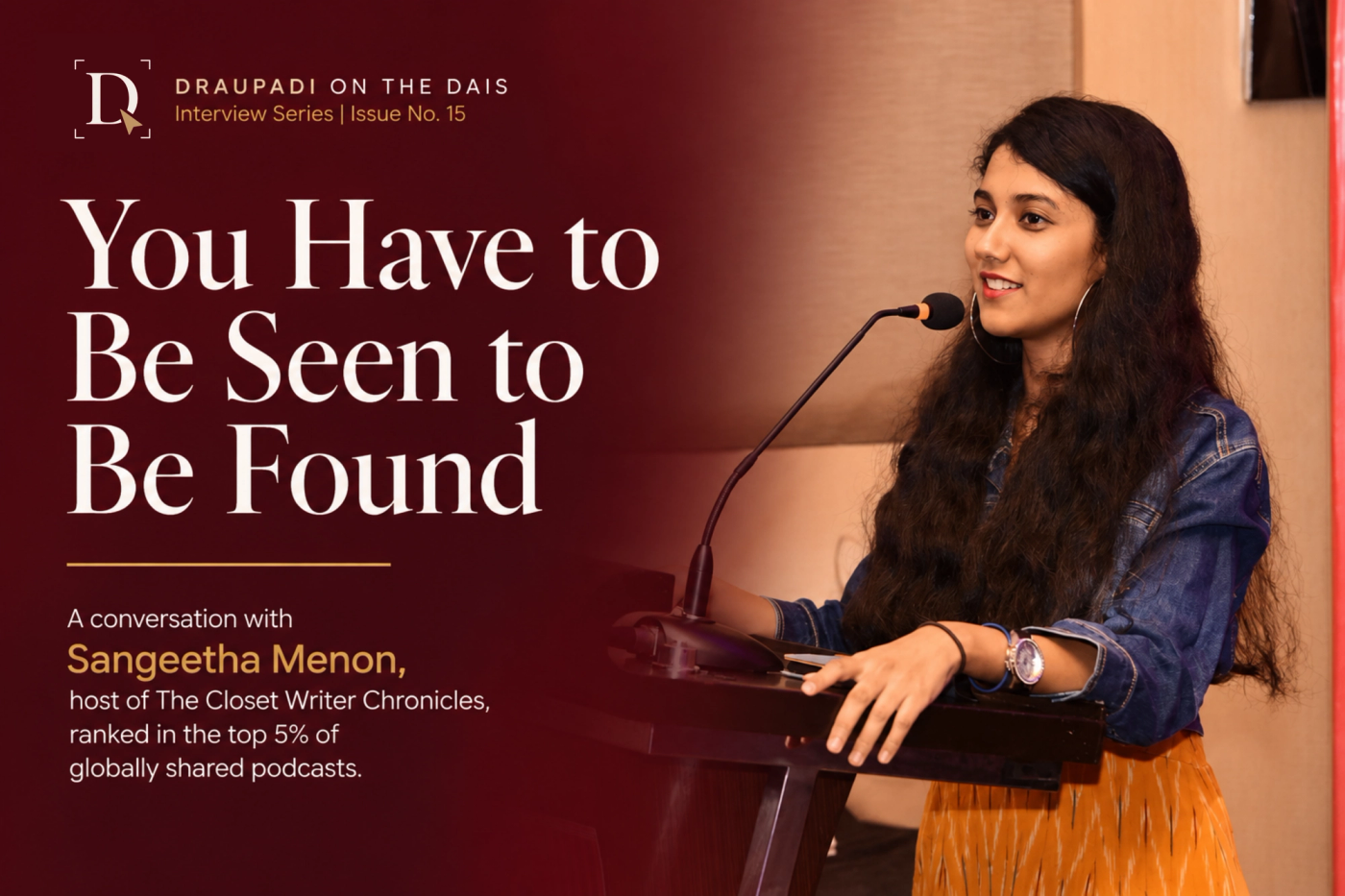
Sangeetha Menon works with the Director's Office at Chakiat Agencies Pvt Ltd, and handles the rights portfolio at Tulika Publishers. She hosts The Closet Writer Chronicles, a long-form interview podcast now ranked in the top 5% of globally shared podcasts.
Trying to Live With Purpose
Q1. Right now, not in your bio but in your actual life, who are you across the different things you are doing?
Someone who is trying to live with purpose and fulfil her potential. It's also funny because of late, I've been getting this question of "How are you able to do so much?" But it doesn't feel that way to me. That's possibly due to me becoming better at knowing when to take a break from things and also being fine with starting something completely new as a beginner.
Building Systems, Making Sure It All Flows
Q2. There is usually work that happens with no name on it, no metric attached, and that most people around you probably do not notice. What is the most important thing you do that fits that description?
Building systems and processes, and making sure it all flows properly. More often than not, people only realise a competent person's worth when they aren't there and it dawns on you as to how much intangible work they were also taking care of. Sad but true.
I Take Ownership Of My Decisions
Q3. Most careers have a decision that looked wrong from the outside and turned out to be exactly right. What was yours, and what did it teach you that no formal experience could have?
I think most of my decisions have been questioned over the years. But it's also about understanding where the questions are coming from – concern, fear or just being unable to make sense of what you're trying to do. As long as you're clear about why you're doing what you're doing and aware of the potential consequences – both good and bad – then you don't really need anyone else to understand. It's definitely a huge advantage and support to have at least one person stand with you but sometimes it's alright if that isn't the case. Eventually, you and everyone else will know if the path you’ve chosen is working or not. Additionally, you need to take ownership of the outcome whether it’s positive or not.
Coming back to my decisions, I think the most pivotal ones were when I decided to take a step back from my family business to figure myself out and the decision to start my podcast 'The Closet Writer Chronicles' and how to execute it. With the former, everyone's concern was around stability but for me that was my window to take a risk and explore different possibilities. Most importantly, working in different fields has helped me learn more skills, discover what I'm truly passionate about and given me confidence in my own abilities. My time in publishing has definitely helped me hone my managerial and business strategy skills along with creative thinking.
With the podcast, there was uncertainty on if this show would get an audience at all given that it was audio-only. It was also long form conversations and most of the guests featured were people who weren't very well known. Today, the show is in the top 5% of globally shared podcasts. I'm glad that I went with my instincts on this one and stuck to my conviction on what I wanted 'The Closet Writer Chronicles' to stand for. Even now, I'm getting questioned about the show being on hiatus but I'm hoping that will help the podcast come back stronger.
Beyond the Books and the Podcast
Q4. Beyond the books and the podcast, is there something you've been quietly building on the side, something that doesn't show up on your LinkedIn or have a title, but that you'd still call real work? What is it?
I’ve been working on my writing. I revived my newsletter on Substack - The Moody Mail - and have been building a writing routine bit by bit. I placed in the top 10 of this year’s Wingword Poetry Prize which was significant for me. And I’m slowly working towards getting better at my craft and to get published more. The dream is to have a book or more out in the future. Though I don’t want to limit myself to just that.
You Have to Be Seen to Be Found
Q5. There is a version of visibility that requires performance, constant output, constant presence. And there is another version that is just being findable in the right places. How do you think about the difference?
This is a very good question and a very relevant one for the times we live in. I feel like this comes down to what each person wants for themselves. You can be at every networking event, on all social media platforms talking about your work and trying to be as loud and out there as you want. You can also be very intentional about who you want to connect with, where you want to talk about your work and figuring which spaces would be relevant for you to be at. Both work. It just comes down to what each person is comfortable with doing and what seems to work better for them. It's a case of either shooting at many different targets and hoping you get one or more hits or constantly shooting at a specific target till you hit the intended mark.
I lean more towards the latter because I'm more of an introvert and don't have that kind of energy to be everywhere and talking to everyone. I'll attend specific events where I know it'll mostly be people related to my work or interests. Even when I reach out to someone for a collaboration, I'm very intentional about it. I'll participate in communities and platforms that I resonate with. However, I do make it a point to post about my work as much as I can or think is appropriate on social media. The crux of the matter is you have to put yourself out there. You can decide the degree of exposure but you have to be seen to be found.
Print Is Not Dying
Q6. What is the most widely held belief in your field that you quietly, or not so quietly, disagree with?
The notion that print is dying. I think the way it's produced and distributed might change but I don't think that books in print will ever truly go away. Literature and books right now are suddenly at centre stage in pop culture. There is also a revival of magazine culture and a rising demand for analog forms of entertainment. There are also cognitive benefits to reading physical books for adults and children.
We Need More Creative Enterprises in Different Regions
Q7. If you could change one thing about how your field identifies, develops, or elevates expertise, what would it be?
This isn't publishing specific but I think creative industries need to decentralise opportunities. A lot of creative work in India is still concentrated in Delhi and Mumbai, then some of it is happening in other tier 1 cities like Kolkata, Bengaluru and Chennai to mention a few. And now, some tier 2 cities as well. It is changing a little bit but I think there needs to be more access to creative work and opportunities in other parts of India. I started in publishing with a remote internship with a Mumbai based organisation which was available due to the pandemic. Later, I was in a position where I couldn't move cities, and then thankfully I found a few on-site opportunities in Chennai. And I've seen this happen with a few other creative professionals as well. If this is the case for those of us who were lucky enough to live in places that had some opportunity then it's quite sad to think of people who can't explore a creative career due to the absence of opportunity in their own towns and the inability to change their location. So, we definitely need more creative enterprises in different regions and more access to work.
Sangeetha Menon works with the Director's Office at Chakiat Agencies Pvt Ltd and hosts The Closet Writer Chronicles. This interview was conducted as part of the Draupadi on the Dais Interview Series.