Where Are The Women On Conference Panels?
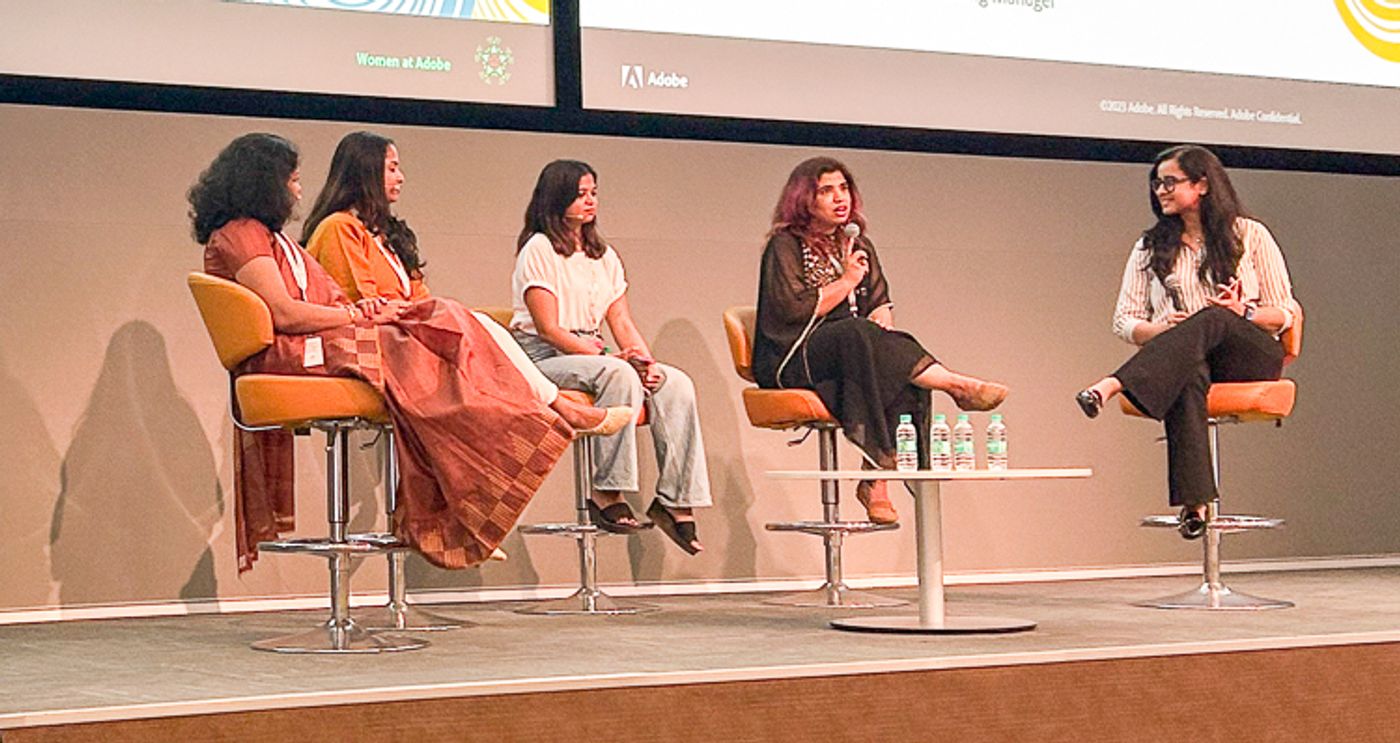
A 2026 industry analysis notes that women CEOs in NSE 500 companies just crossed 7 percent. It is the kind of number that gets circulated as progress, and in a narrow sense it is. But sit through a week of business conferences in Mumbai, Delhi, or Bengaluru and the stage tells a different story. Panel after panel on marketing, technology, finance, and leadership convenes with the same lineup: four or five men, one moderator, and a title card that promises a conversation about "the future of the industry." The boardroom has moved, slowly. The stage has not moved with it.
This is the manel problem, and it is not new. The term itself, a portmanteau of "male" and "panel," has been in circulation for close to a decade. What is worth examining in 2026 is why Indian media brands, event organizers, and marketing conclaves keep reproducing the pattern even as the underlying justification for it, that qualified women simply are not available, gets harder to defend every year.
The gap between the boardroom and the stage
The comparison is instructive. Corporate India's gender numbers are unglamorous but they are moving. Women now hold roughly a fifth of board seats at NSE 500 companies, up from single digits a decade ago. CEO representation is smaller and slower, with recent industry tracking placing the share of NSE 500 companies led by a woman CEO or managing director at around 5 percent, a number that reveals how far women still are from the roles where strategy, capital, culture, and power are truly shaped. Put the 2026 figure of just over 7 percent next to that baseline and the trajectory is real, even if it is slow.
Conference lineups do not show a comparable trajectory. There is no annual tracker publishing the gender split of speaker slots at Indian marketing, media, and business events the way proxy advisory firms track board composition. That absence is itself a signal. What gets measured gets managed, and Indian event organizers have mostly opted not to measure this at all.
The Indian diversity and inclusion firm Ungender has tried to fill that gap informally, monitoring conference lineups since the pandemic-era shift to virtual panels. Their tracking found that even organizations that publicly commit to inclusion routinely convene panels with zero women speakers, and that manels serve as brutal reminders of who occupies the most space, has the most agency and enjoys the most amount of legitimacy and visibility in the Indian workforce. Their audit of a cybersecurity manel found that it took roughly an hour of searching to surface qualified women who could have filled every seat on the stage. An hour. Not a quarter, not a hiring cycle. An hour.
Why "we couldn't find anyone" keeps working as an excuse
The standard defense from organizers is familiar to anyone who has raised the question directly: there simply were not enough senior women in the relevant field, or the ones who were available were unavailable on the date, or the ask came in too late to build a diverse lineup. Sree Sreenivasan, the digital media expert who pledged in 2016 to stop appearing on all-male panels, described the pattern well when he told an interviewer that the phenomenon had become invisible to him until he actively started looking for it, noting that women across different fields of expertise have been lamenting the lack of female representation on panels for decades without much shifting as a result.
The excuse survives because it is rarely tested. Most speaker selection at Indian media and marketing events still runs through the same closed loop: an organizer's existing contact list, a handful of repeat names who have proven reliable on previous panels, and a PR or comms team asked to "suggest a few options" under time pressure. Nobody in that loop is required to search systematically. Nobody is measuring the outcome against a benchmark. The result is a search problem masquerading as a supply problem. Senior women in Indian marketing, finance, technology, and media exist in significant numbers. They are simply not in the three degrees of separation that most conference producers default to when a deck is due in 48 hours.
This is the argument Draupadi on the Dais was built to make with infrastructure rather than op-eds: the shortage is not women, it is the sourcing system organizers rely on. A searchable network of vetted, camera-ready women experts across sectors turns "we couldn't find anyone in time" from a plausible excuse into a choice.
What a manel actually costs a brand
The cost of an all-male panel used to be reputational, and slow to materialize. That has changed. Audiences at business conferences increasingly include the same women who are absent from the stage, and they notice the mismatch between an event's stated values and its actual lineup. A marketing conclave that runs a keynote on inclusive consumer strategy, followed by a five-person panel on "the future of Indian retail" with no woman on it, is not a hypothetical. It is a recurring Tuesday at most trade events in the country.
There is also a quieter cost, harder to put a number on but easier to feel in the room: the narrowing of the conversation itself. A panel drawn from a single, homogenous talent pool tends to reproduce a single set of assumptions about the market, the customer, and the problem worth solving. Writers who track the manel phenomenon internationally have made a version of this point for years, arguing that diverse panels surface sharper, less predictable insight precisely because they are not drawing from one professional network. An Indian consumer market where women make or influence the majority of household purchasing decisions is poorly served by strategy panels that exclude the people making those calls.
For media brands specifically, the exposure is sharper still. A publication or platform that positions itself as covering business and culture with any claim to relevance cannot credibly do that coverage through an unbroken run of male-only panels at its own flagship events. The lineup is the brand's most visible editorial decision of the year, more visible than most of what runs in print or online, because it happens in a room full of the people the brand is trying to reach.
A feedback loop that outlasts any one event
Manels do not just fail on the day. They compound. The speaker who gets the stage at a marketing conclave is more likely to get quoted in the trade press covering it, more likely to be tagged in the recap posts, more likely to show up on next year's shortlist because the organizer's own event archive now lists him as a proven draw. The speaker who was never invited accumulates none of that. Over five or six annual cycles of the same conference, the gap between the two speakers' visible track record widens, and it widens for reasons that have nothing to do with expertise.
This is why the "we go with who has spoken before" logic that many organizers use to defend a lineup is worse than it sounds. It is not neutral. It is a mechanism that takes whatever imbalance existed at cycle one and locks it in, because each cycle's guest list becomes the shortlist for the next. A media brand that wants a different outcome five years from now has to interrupt that loop deliberately, this year, rather than wait for it to self-correct. It will not self-correct. Closed systems rarely do.
The same logic applies to who a business journalist calls for a reaction quote, who gets asked to contribute a guest column, and who ends up on an industry "ones to watch" list compiled from an editor's existing contacts. Each of these is a smaller, quieter version of the same manel mechanism, and each one is running inside most Indian business media right now, largely unexamined.
The fix is not a pledge, it is a system
Public pledges not to appear on manels, of the kind Sreenivasan popularized, have some value as individual accountability. But they place the burden on speakers to police lineups they did not build, and they do nothing to fix the sourcing problem underneath. The organizations that have actually moved the needle on their own events did it by changing process, not by asking individual panelists to opt out.
That means building and maintaining an actual database of qualified women by sector, rather than relying on the same six names that circulate through every WhatsApp group of conference producers. It means giving the speaker search the same lead time and rigor given to sponsorship decks and venue bookings, instead of treating it as a last-minute task handed to whoever is free. It means setting an internal minimum, even an informal one, and holding the programming team to it the way a finance team is held to a budget.
It also means looking past the conference circuit itself. The same discovery gap that keeps stages male shows up in who gets featured, profiled, and made visible across Indian business media more broadly, from op-ed bylines to "40 under 40" lists to the experts a business journalist calls first for a quote.
The number that should worry organizers
Seven percent is not a finish line. It is a floor that took more than a decade of board diversity mandates, shareholder pressure, and slow institutional change to reach. Conference programming has none of those mechanisms forcing it forward. There is no regulatory requirement for a gender-balanced panel, no proxy advisory firm auditing speaker lineups the way IiAS audits board composition, no consequence more serious than an occasional callout post.
That means the stage will keep lagging the boardroom until organizers decide, on their own initiative, to treat lineup composition as seriously as they treat sponsorship revenue. The tools to do that already exist. The excuse that they don't is the one thing about this problem that has not changed in ten years.
Draupadi on the Dais connects accomplished Indian women experts with the panels, media, and platforms built to find them. Claim the Dais. Follow us at @draupadionthedais.