The Ownership Gap: What Actually Separates Women Who Start Businesses From Women Who Own Markets
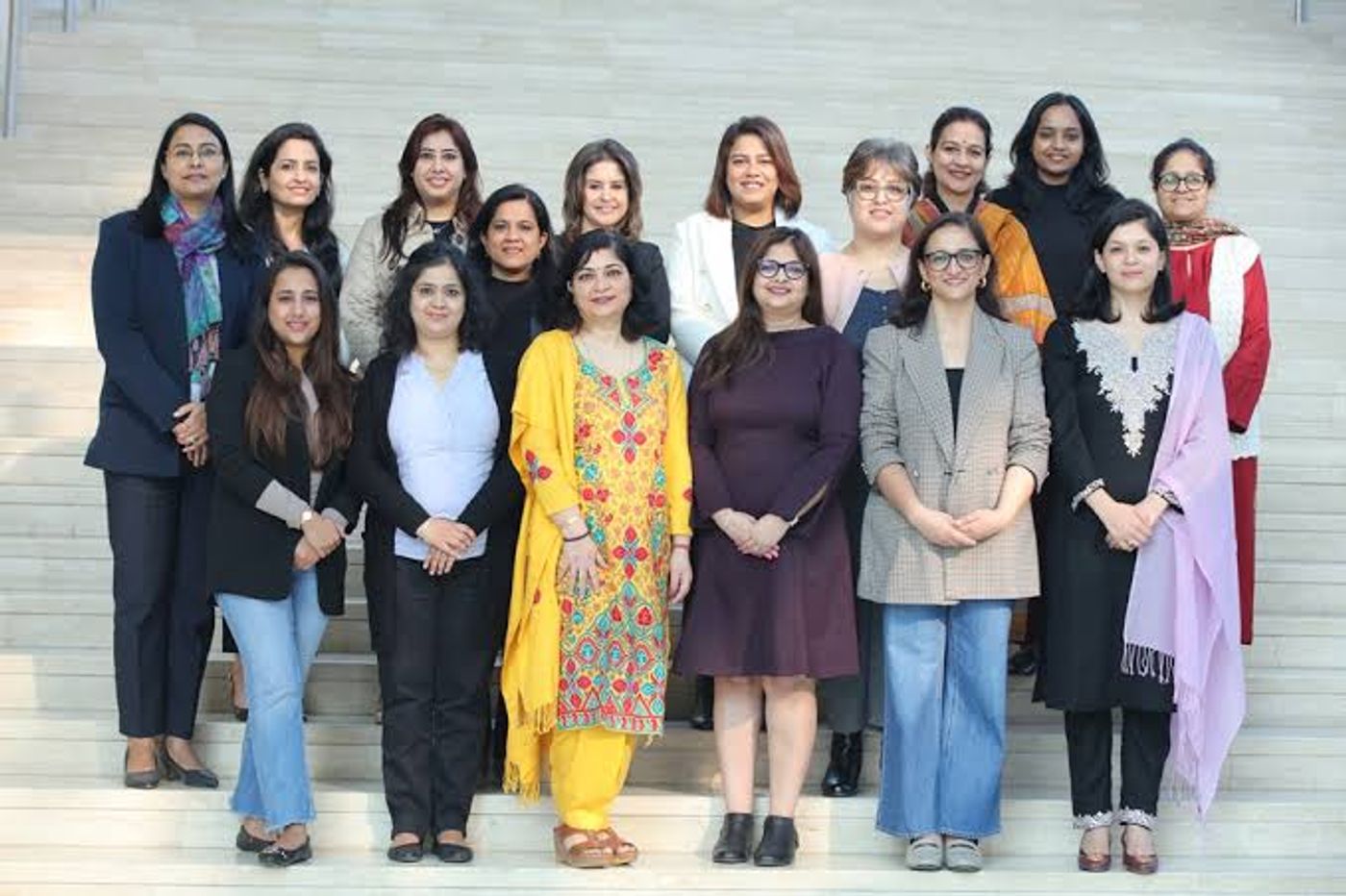
India has never had more women building businesses, and this is not the part of the story that needs re-litigating anymore. What's undercovered is a narrower, more useful question: of the millions of women who start something, how many end up actually owning it (the supply chain, the customer data, the intellectual property, the shelf space) rather than simply operating it?
That distinction, between running a business and owning what it produces, is where the more interesting story of 2026 lives. It is not a story about ambition, and it is not primarily a story about bias in a pitch meeting, both of which have been written about at length elsewhere. It is a story about infrastructure: which forms of capital, technology, and market access are actually reaching women founders, and which are still bypassing them entirely.
It is also, deliberately, a narrower story than the one usually told. Most coverage of women's entrepreneurship in India moves quickly to the big, familiar levers such as funding bias, board seats, and investor networks, because those are easy to name and easy to feel indignant about. They are also, by now, well documented. What gets less attention is the machinery sitting one level below that: the procurement portal that quietly replaces a term sheet, the AI tool that quietly replaces a hire, the rural credit scheme that quietly replaces a decade of waiting for a bank to say yes. None of these make for as dramatic a headline. All of them are doing more, right now, to move specific women from operating a business to owning one.
Three Kinds of Capital, and India Mostly Talks About One
Ask most people what a founder needs to scale, and the answer is almost always venture capital. It's the most visible form of funding, the one covered in headlines, and the one every "women in business" panel eventually circles back to. But venture capital is only one of at least three distinct resources a business needs to grow, and the other two get discussed far less, even though, for most women-led enterprises in India, they matter more.
The second is business credit: debt that lets an existing, revenue-generating business expand without giving up equity or control. The third, and the most overlooked, is market access: the customers, contracts, distribution deals, and institutional buyers that determine whether a good product actually reaches scale.
This third category has quietly become one of the more effective levers in the Indian system, largely because it doesn't require a founder to win over an investor at all. Public procurement platforms have opened a direct, digital channel between women-led enterprises and government buyers, cutting out the layers of intermediaries who once made these markets nearly impossible to enter without existing connections. A founder who will never get a term sheet can still win a government contract, a retail listing, or a distribution partnership, and for the overwhelming majority of India's women-led businesses, that is the more realistic route to real revenue, not a consolation prize.
What Ownership Actually Looks Like, Sector by Sector
The word "entrepreneur" gets applied equally to a woman running a home-based tiffin service and a woman running a hundred-crore manufacturing unit, and treating them as the same story flattens something important. The more useful lens isn't the size of the business. It's whether the business is accumulating something that compounds (assets, proprietary processes, customer relationships, or intellectual property) or whether it is generating income that resets to zero every month.
This shows up differently across sectors. In direct-to-consumer brands, ownership means holding the customer relationship and the data behind it, rather than renting both from a marketplace algorithm that can change the rules overnight. In manufacturing, it means owning the machinery, the supplier relationships, and the process knowledge that a competitor can't simply copy. In climate and health ventures, it means sitting at the center of a market that is still being defined, rather than competing for space in one that's already mature and crowded. None of this depends on venture funding. It depends on whether the underlying business model lets a founder keep what she builds.
It's worth being specific about why this distinction gets missed so often. A revenue chart looks identical whether the money is coming through a platform that could delist the seller tomorrow or through a proprietary channel the founder controls outright. Two founders can post the same monthly numbers while one of them owns almost nothing that would survive losing her biggest sales channel, and the other owns a customer list, a brand, and a supply relationship that would let her rebuild elsewhere within months. Judged purely on revenue, they look like the same success story. Judged on ownership, they are building two entirely different futures, and only one of those futures compounds.
AI Is Quietly Changing Who Can Afford to Operate at Scale
Historically, scaling a business meant hiring: a marketing team, an operations manager, a bookkeeper, someone to handle customer service. That kind of team has always been expensive, and expense has always fallen hardest on founders with the least access to early capital, disproportionately women running smaller and self-funded businesses.
AI tools are beginning to close that gap in a way that has less to do with ambition and more to do with arithmetic. A founder today can automate customer queries, generate marketing content, track inventory, and manage basic bookkeeping without hiring a single additional person. Adoption has moved fast: AI use among women entrepreneurs in lower- and middle-income countries has more than doubled within a single year, and dedicated training partnerships are now reaching women entrepreneurs well outside India's major startup hubs, not just inside them.
The more honest part of this story is where the gap remains. Most of that adoption is still concentrated in easier, front-facing tasks like content and communication, and far less in the harder operational core: bookkeeping, financial planning, and inventory forecasting, the unglamorous functions that actually decide whether a business survives its third year. AI doesn't remove the structural barriers women founders face. It lowers the cost of some of them, but only for the founders who push past the easy layer of adoption into the parts of the business that were previously locked behind a hiring budget.
The Enterprise Infrastructure Rural India Is Building, Instead of Waiting For One
The assumption embedded in a lot of entrepreneurship coverage is that meaningful business growth starts in a handful of cities and eventually trickles outward. India's rural entrepreneurship data increasingly tells a different story: not of women waiting for urban-style infrastructure to arrive, but of a parallel enterprise system being built through very different mechanisms.
Rural livelihood missions have moved beyond distributing income support toward something closer to enterprise infrastructure: mobilizing rural women into self-help groups with their own credit histories, training thousands of women as certified operators of new technology like agricultural drones, and setting up dedicated retail channels specifically for products made by women-led collectives. A woman running a small manufacturing unit in a Tier 3 district and a woman running a drone rental service for local farmers are both, in a very real sense, owners of a piece of infrastructure that didn't exist for them a decade ago: not recipients of a one-time grant, but operators of something ongoing.
This distinction matters because it changes what "scale" should even mean outside the startup-hub context. A rural entrepreneur doesn't need a Series A round to build something durable. She needs consistent access to credit, a functioning market for what she produces, and the ability to hold onto the asset she's built rather than have it depend entirely on a single scheme cycle. The infrastructure being built in rural India right now is aimed, deliberately, at exactly that kind of durability.
Why This Framing Matters More Than the Usual One
None of this is an argument that funding bias, board access, or investor networks don't matter. They clearly do, and that ground has been covered thoroughly elsewhere. But treating access to capital and access to networks as the whole story misses where a large share of India's women-led enterprises actually sit: not one funding round away from a breakout, but one procurement contract, one operational AI tool, or one credit cycle away from turning a business they run into a business they own outright.
The next phase of Indian women's entrepreneurship won't be decided only in venture pitch meetings. It will be decided in the quieter, less-covered spaces: a procurement portal, a bookkeeping app, a self-help group's credit history, where ownership is either being built one transaction at a time, or isn't being built at all.