When The Map Moves, So Does The Search For Who Gets To Explain Why | Dais Watch
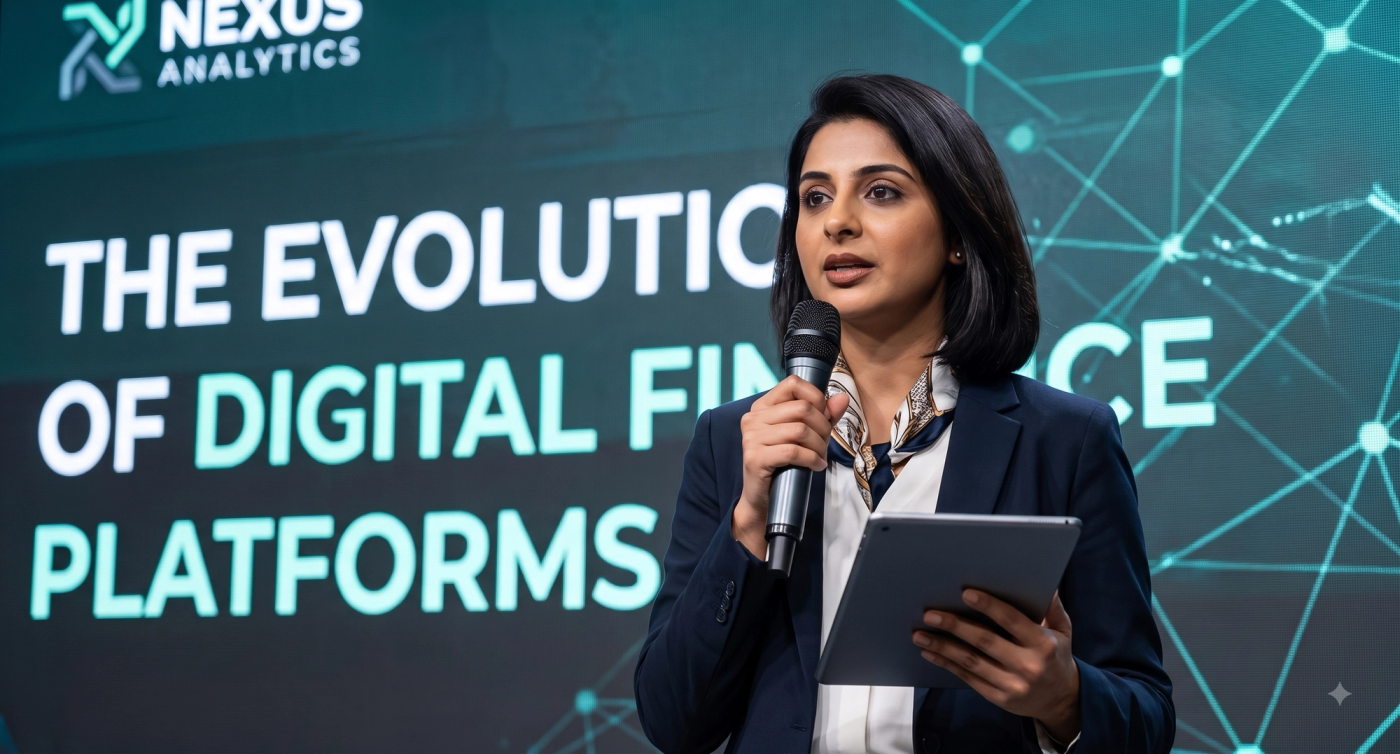
A technology industry forum held in Delhi this month ran a panel on how geopolitical shifts are reshaping marketing budgets. Tariffs, supply chain uncertainty, the push toward AI-driven ROI, the pressure to justify every rupee of spend to a board watching margins tighten. Five speakers took the stage to unpack it. All five were men.
This keeps happening in a specific, recognisable pattern. It is not that the panel lacked expertise. Every speaker on stage had something real to say about budget discipline under pressure. It is that the search for who counts as an expert on this subject stopped at a familiar shortlist, and that shortlist is reliably male, even on a topic where women hold real, current operating responsibility.
The numbers back this up, with the caveat that the clearest data here is global rather than India-specific, since granular India-only breakdowns by function are harder to come by. Grant Thornton's 2026 mid-market leadership research puts women at just under 30 percent of CMO roles worldwide, the lowest share among the major C-suite functions it tracks, well behind CFO and HR. Coverage of that research frames the pattern plainly: women are closer to parity in people leadership than in the roles that control budget and public voice. In India specifically, outlets covering the marketing industry, like Storyboard18's rundown of the country's leading women CMOs, tend to frame senior women marketers as notable individual profiles worth writing up, rather than as an unremarkable baseline presence on any given industry stage. BW Marketing World's annual list of India's most influential marketing leaders does show the number of women on it growing year over year, which is real progress. But growth on an annual awards list and routine inclusion on a Tuesday afternoon panel are two different things, and the second one is where this pattern keeps failing.
There is a specific mechanism behind why this keeps happening, and it has less to do with intent than with habit. Panel organisers working under time pressure default to whoever they already know, or whoever a first search turns up fastest. In enterprise technology and B2B marketing circles, that first pass tends to surface the same handful of names, repeatedly, because visibility compounds. A speaker who has appeared on three panels is easier to find than one who has appeared on none, regardless of what either has actually done in the role. Over time, this turns into a closed loop: the people who get invited are the people who were already visible, and the people who were already visible are disproportionately men, because the earlier rounds of this same shortcut favoured them too. Breaking that loop requires a deliberate widening of the search, not a wait for the right woman to somehow become as visible as the men already are.
The panel's own premise makes this an unusually live issue for Indian enterprise marketing right now, not a hypothetical one. India's IT services and technology export sector has spent the past several years navigating exactly the pressures the panel named: shifting trade policy, tighter client budgets in the West, and a fast-moving push to prove that AI investment translates into measurable return rather than experimentation. Marketing leaders inside these companies are not commentators on this environment. They are the people whose budgets get cut first when a client tightens spend, and whose job it is to make the case, quarter after quarter, for why marketing investment should survive a defensive posture. That is precisely the expertise the panel was reaching for. It existed inside companies represented on the very same industry circuit as the event itself.
This particular topic makes the gap harder to justify than most.
Marketing budgets under geopolitical pressure is not an abstract or niche brief. It sits squarely inside the day job of any senior marketing leader at a multinational, a distributor, or an enterprise technology company operating across borders. Women hold exactly these roles in India today, at global technology firms, at industrial and infrastructure companies, at IT services firms managing client budgets through the same uncertainty the panel described. The expertise is not adjacent to the topic. It is the topic. A marketing leader running a global brand function for a Fortune 500 technology company, or defending martech spend to a CFO at an Indian IT services firm posting results through a shaky macro environment, has already lived the exact scenario the panel spent an hour theorising about.
There is also a quieter pattern worth naming. The panel in question did have a woman present. She moderated it. A moderator asks the questions; she does not answer them as an authority on the subject. That distinction matters, because it lets an all-male expert panel pass a casual glance as mixed, when the actual subject-matter voices in the room were still five men. Visibility as a moderator is not the same as visibility as an expert, and treating the two as interchangeable is part of how this pattern keeps going unnoticed. A search that only checks whether a woman is somewhere on the stage, rather than whether a woman is one of the people being asked to answer the hard question, will keep producing panels that look fine from a distance and are not.
Enterprise and B2B technology marketing carries a particular version of this problem, distinct from consumer marketing, where women's visibility has grown faster and more publicly. Consumer brand marketing produces campaigns, launches, and public-facing storytelling that generates its own press coverage, which means the women leading it tend to accumulate visibility as a side effect of doing the job well. Enterprise marketing works differently. The output is largely invisible to anyone outside the client relationship: pipeline generation, account-based strategy, budget defence in front of a CFO, brand investment decisions made in a boardroom rather than a launch event. A woman running enterprise marketing for a multinational technology company can be doing exactly the kind of high-stakes, board-facing work a geopolitics-and-budgets panel wants to discuss, and still never surface in a casual search, because the nature of the work does not generate the same public trail that consumer marketing does. This makes the "we searched and couldn't find anyone" excuse even less credible in this specific category than in most others. The women are not absent from public life. They are absent from the kind of visibility that a five-minute search rewards, which is precisely the gap a platform built around a curated, searchable directory is meant to close.
None of this argues for filling a seat to make a panel look better. It argues for a different starting point in the search itself, one that treats marketing leadership in global, budget-constrained, technology-adjacent roles as a space where women are already doing the work, not a space that needs convincing to include them. The Dais's speaker search exists for exactly this moment, when an organiser needs a name and reaches for the fastest one instead of the right one.
Five women whose current roles sit directly inside this brief:
Tuhina Pandey is Director of APAC Communications & Marketing for IBM India and South Asia, where she leads integrated go-to-market and brand strategy for a multinational technology company operating across a region shaped by exactly the kind of trade and supply chain shifts the panel discussed. She joined IBM after leading global corporate communications at Tech Mahindra, giving her a working view of how enterprise technology budgets get planned and defended across borders, and she was named to Business World's Most Influential Women 2025 power list for that work.

Bidisha Nagaraj is Vice President of Global Marketing for Schneider Electric's Home and Distribution division, having previously served as the company's India CMO. Her career spans Compaq, Intel, and Schneider across India and the Asia Pacific region, and her current portfolio deliberately mixes Fortune 500 accountability with early-stage Indian companies, giving her direct, repeated experience managing marketing investment through exactly the kind of cross-border volatility the panel's discussion centred on.
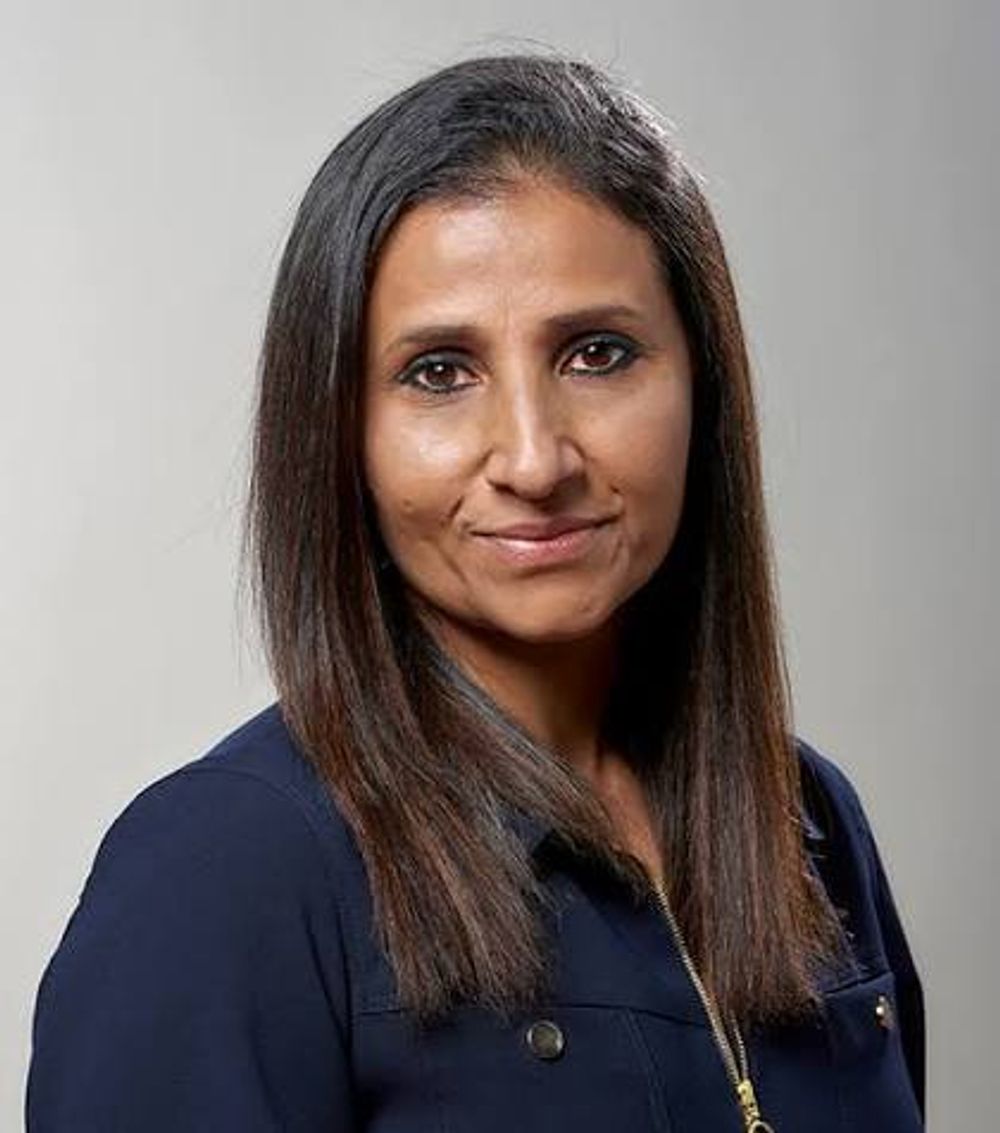
Purnima Menon is Chief Marketing Officer at Marlabs, a digital and IT services company, following earlier CMO roles at Microland and CSS Corp and marketing leadership positions at Infosys BPO. Over more than two decades in enterprise technology marketing, she has repeatedly had to defend and reallocate budget through client-side pressure and macroeconomic uncertainty, the same discipline the panel framed as newly urgent, and she has been recognised among India's 100 most innovative marketing leaders for that track record.
Anjali Gupta is Group Marketing Head at Sify Technologies, one of India's leading digital infrastructure providers, where she runs global marketing strategy for a team spanning multiple regions and has previously worked across IBM, Kyndryl, Infosys, and Lenovo. Her mandate includes building the channel and alliance partner strategy that sits directly downstream of the budget decisions the panel was discussing, and she is also an outspoken advocate for gender balance in the technology sector specifically.

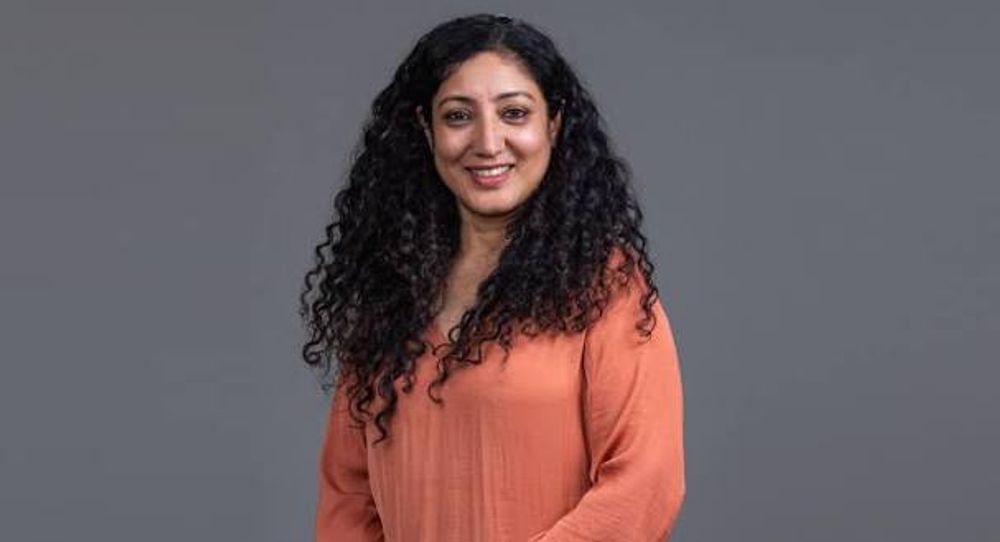
Anuradha Sehgal is Chief Brand and Sustainability Officer at Coforge, a Delhi-headquartered IT services company managing enterprise client relationships and marketing spend through exactly the kind of macroeconomic pressure the panel described. She has spoken openly about defending brand investment through periods when a "challenging macro-economic environment" was the company's own stated context for its results, which is close to a direct answer to the panel's premise rather than an adjacent qualification.
This is not an exhaustive list, and it was never meant to be. It is five names found in the time it takes to run a proper search instead of a fast one, all five currently holding the exact kind of role the panel spent an hour discussing in the abstract. If a search this quick turns up five women running enterprise marketing budgets through global uncertainty, the claim that no one could be found does not hold up to five minutes of scrutiny, let alone the week an organiser actually has.
The next panel on marketing budgets and geopolitical pressure does not need to look like this one. The search stopping early is a pattern The Dais has written about before, and the same gap shows up across adjacent categories too, including in conversations about who India's technology and software sector puts forward as its public voices. What connects all of these instances is not a shortage of qualified women. It is a search process that consistently stops one step too early, at the first few names that come to mind rather than the fuller list that a genuine look would surface. Every organiser who has ever said a mixed panel was hard to put together on short notice has, in effect, described a search that ended before it began.
The Dais exists to make sure the next search does not stop this early. It connects organisers directly to the women already doing this work, across sectors and seniority levels, so that the next conversation about who gets to explain a hard year starts with a wider list than the one that has been circulating for years. The gap here was never expertise. It was reach, and reach is a solvable problem.