Vani Kola Is One of the Few Women VCs Who Gets Quoted as Often as She Invests
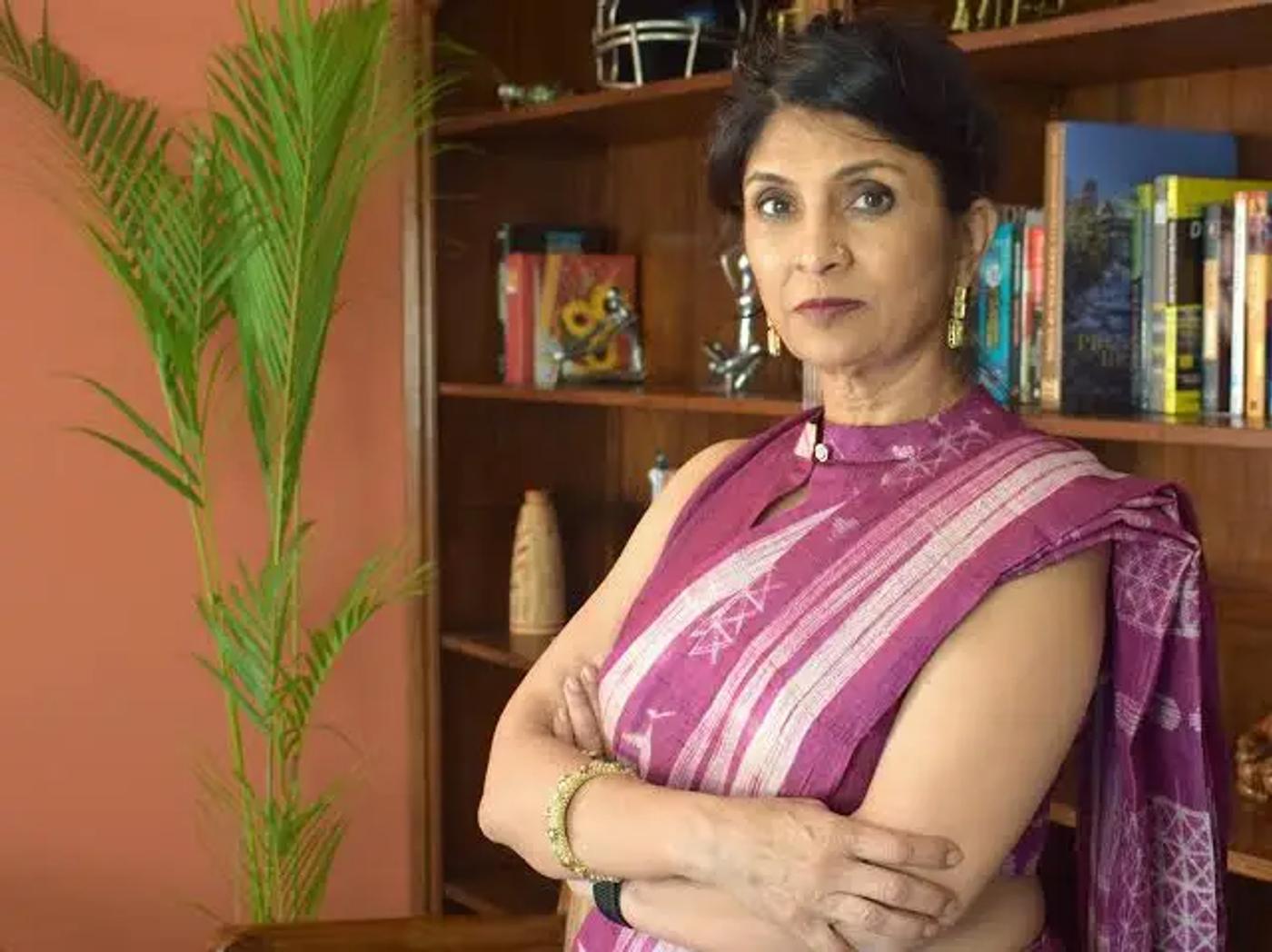
Open any roundup on Indian venture capital's gender gap and the same two or three names show up: Vani Kola, Renuka Ramnath, Padmaja Ruparel. Ask a panel organiser to name a woman investor and the search rarely goes further than that. Vani Kola, in particular, has become something close to shorthand: the founder and managing director of Kalaari Capital, the person journalists call when they need a quote on where Indian venture capital is heading, and one of the few women whose visibility in the industry actually matches, or exceeds, the size of her check book.
That's worth sitting with for a moment, because it isn't how visibility usually works. Most founders and operators are underexposed relative to what they've built. Kola is one of the rare cases where the opposite might be true: she is asked to speak, comment, and appear more often than the raw math of "how many women hold this kind of role" would predict. That imbalance says less about Kola than it does about how thin the bench looks from the outside.
The Track Record Behind the Name
Kola founded Kalaari Capital in 2006 after twenty-two years building and exiting companies in Silicon Valley, part of a run that included a payout in the hundreds of millions of dollars before she returned to India to back founders on this side of the table. She spent two decades in Silicon Valley before coming back to India to become one of the country's early venture capital pioneers, giving her an operator-turned-investor perspective across both markets that is still fairly rare in the Indian ecosystem. Under her leadership, Kalaari has backed more than thirty companies across e-commerce, gaming, digital content, and healthcare, with early bets on names like Myntra, Dream11, Snapdeal, and Cure.fit now part of the standard Indian startup canon.
She has been named to Fortune India's Most Powerful Women in Business list on multiple occasions, and she keeps showing up on stages well beyond the startup circuit: alumni talks, industry forums on capital and entrepreneurship, and recognitions for her role in "India's entrepreneurial ecosystem" that treat her less as a fund manager and more as an institution. None of that is undeserved. Twenty years of sourcing, backing, and mentoring founders earns a platform. The more interesting question for a site built around who gets a seat and who gets a mic is why that platform has stayed so concentrated in one or two names for this long.
The Room She's Usually the Only Woman In
The honest answer sits in the numbers underneath the venture industry, and they are not subtle. Estimates cited by Sapien Strategic Consulting suggest fewer than 10 percent of decision makers at Indian VC firms are women, and women founding partners with actual control over capital make up only around 2 to 3 percent of private equity and venture firms in the country. A 2023 analysis from Kalaari Capital's own research arm put the male-to-female investor ratio in India at roughly 10 to 1, with women holding around 7 percent of partner seats across the world's top 100 venture firms. Nearly seven in ten women founders pitching for capital say they were the only woman in the room.
That is the structural fact hiding behind every "top woman investor" list: there simply aren't that many seats to point to. When an event needs a woman who can speak credibly on venture capital, term sheets, or founder selection, the pool of instantly recognisable names is small enough that the same handful of people end up carrying the visibility load for an entire profession. Kola didn't create that scarcity. She is, in a sense, its most visible symptom, proof that the industry can produce prominent women even while remaining overwhelmingly closed to them in the aggregate.
The Founders Are Growing Faster Than the Funders
The paradox sharpens when you look at what's happening one level down, among the founders Kola and her peers are supposed to be funding. Women-led startups in India raised only 11 percent of total VC funding in 2025, well below their 18 percent representation among founders, and the gap widens sharply at later stages even though pre-seed and seed deals are close to parity. More than a lakh of India's DPIIT-recognised startups now have at least one woman director or partner, and the first half of 2026 saw women-led ventures pull in record funding across fintech, health-tech, and sustainability. The founder pipeline, in other words, is visibly widening.
The investor pipeline is not widening at anything close to the same speed. Founders Forum Group's 2026 data points to a structural pattern industry insiders describe bluntly: growth-stage capital in India is still allocated mostly by men who back founders who remind them of themselves, which is a large part of why the funding gap gets worse, not better, as companies scale. More women are starting companies. Far fewer are the ones deciding which of those companies get the next round. Kola sits on the rare side of that ledger, and it's precisely because there are so few others sitting there with her that her name keeps recurring in every list, panel, and quote roundup on the subject.
What One Visible Name Can't Fix
It would be a mistake to read Kola's prominence as evidence the gap is closing. A handful of well-known women VCs, however accomplished, doesn't change the underlying arithmetic of who controls capital allocation in India. If anything, an overreliance on a small set of familiar names can quietly let organisers, media, and LPs off the hook: the "we had a woman on the panel" box gets checked without any change to who's actually writing checks at the fund level, or which associates get promoted into partner seats where the real decisions happen.
Kola herself has spoken about this from the inside, describing what it takes to build durable relationships with founders and set high standards for organisational discipline rather than framing her career primarily around gender. That's a reasonable way for any individual investor to talk about her own work. But a media and events ecosystem that only ever reaches for the same two or three women when the topic is "venture capital" is still, in effect, treating visibility as a substitute for representation rather than a step toward it.
Where This Leaves the Panel Circuit
For anyone building a conference agenda, a fund's advisory board, or a media roundtable on Indian startups, the practical challenge is real: the directly comparable names to Vani Kola, in terms of tenure, portfolio, and public profile, are genuinely few. That scarcity is exactly the kind of gap we've written about before when it comes to expert panels more broadly, where organisers default to the same handful of names not out of laziness but because the visible bench looks thinner than the actual talent pool underneath it. The same dynamic that keeps women scarce in tech leadership shows up in tech and software speaker rosters, and it shows up here too, just one layer up the capital stack.
There are more women in venture in India than the panel circuit currently surfaces: principals and vice presidents on their way up, operating partners at newer funds, angel investors quietly writing the earliest checks into women-led companies. Kola's visibility is earned. Whether it stays this concentrated, or starts to widen as the next cohort of women investors moves into partner seats, is the more open question, and not one that gets settled by any single list, including this one.
Draupadi on the Dais connects accomplished Indian women experts with the panels, media, and platforms built to find them. Claim the Dais. Follow us at @draupadionthedais.