Uma Sudhir Left NDTV After 27 Years. What Happens to a Senior Woman's Platform When She Exits?
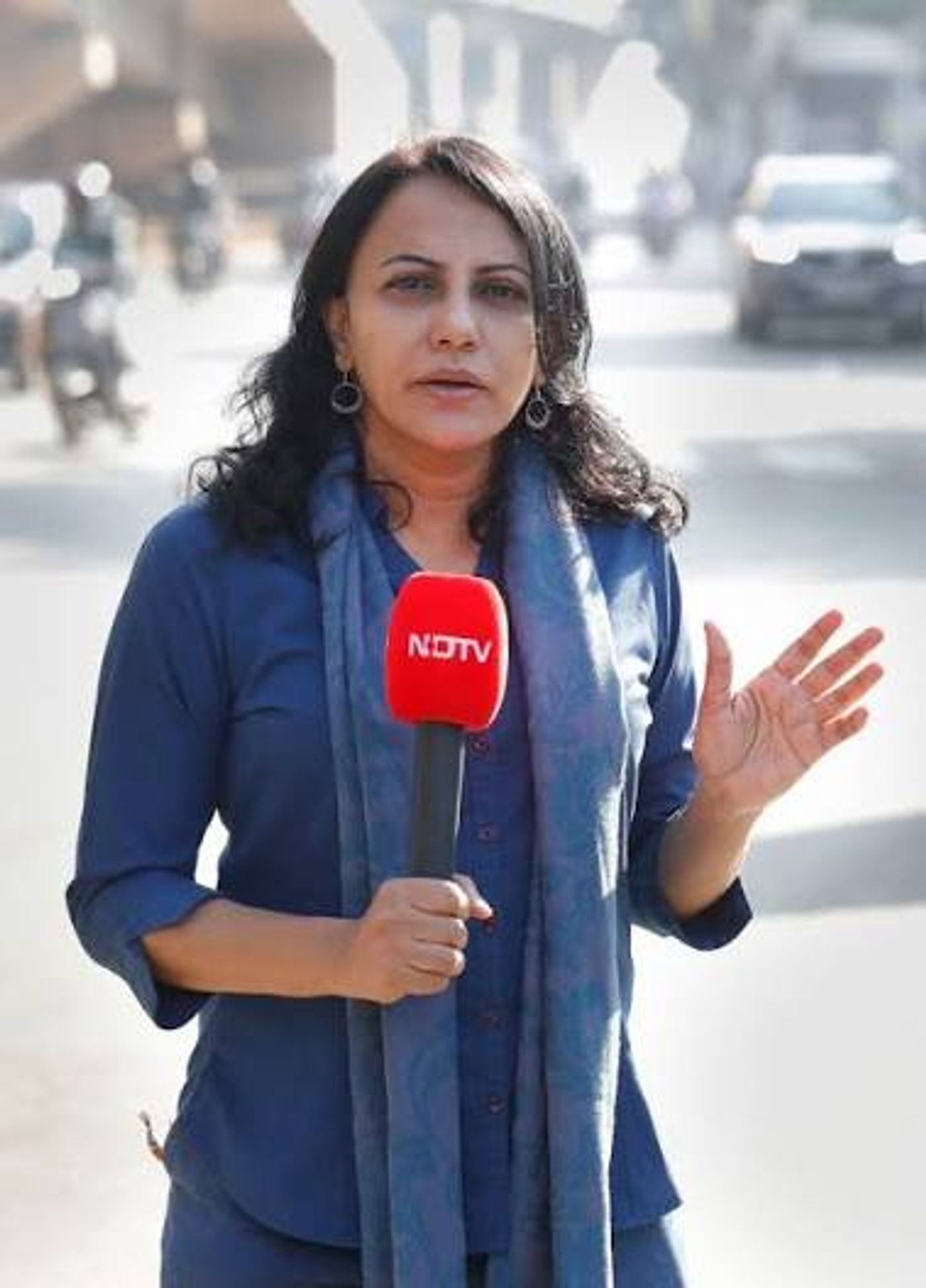
In February 2026, Uma Sudhir signed off from NDTV for the last time. She had spent 27 years there, rising to Executive Editor of the network's South India operations and becoming one of the most recognisable names in ground reporting from Telangana and Andhra Pradesh. In her own resignation post, she called NDTV an inseparable part of her life, almost a middle name. That is not a small thing to say about an institution you are leaving. It is also, without meaning to, the whole problem this essay is about.
Visibility built over decades inside an institution does not automatically travel with the person who built it. Some exits convert cleanly into an independent career with a bigger audience than the newsroom ever gave them. Others do not, and the reasons a woman's exit tends to fall into the second category are worth naming plainly, because they rarely have anything to do with the quality of her journalism.
What 27 years at a national desk actually built
Sudhir's résumé is not soft. She is a recipient of the Ramnath Goenka Excellence in Journalism Award and the Chameli Devi Jain Award for Outstanding Woman Mediaperson, two of the more credible honours in Indian journalism precisely because they are awarded for the reporting, not the ratings. Her coverage spanned elections, governance, rural distress, gender and environment stories across two states that rarely got sustained national attention outside election season. For nearly three decades, when a national broadcaster needed context on what was actually happening in Hyderabad or Amaravati, Sudhir was very often the person supplying it.
That is a real body of work. It is also a body of work that lived almost entirely inside NDTV's distribution. Her byline carried weight because NDTV's name carried weight. Her reporting reached a national audience because NDTV's transmission reached a national audience. Strip away the institution, and what remains is the reporting itself, plus whatever direct audience she built independently of it, which for most field reporters, as opposed to primetime anchors, is considerably smaller.
The career underneath the headline
The 27-year figure gets repeated in every write-up of her exit, but it flattens a longer arc. Sudhir began her career at The Times of India in New Delhi after a journalism programme at the Times School of Journalism, and was reportedly the paper's features editor at the time it covered Sushmita Sen's Miss Universe win in 1994, a detail that places her inside Indian newsrooms a full three years before she joined NDTV. She moved to Hyderabad in 1995 and spent the following decades building the kind of regional political sourcing that cannot be manufactured quickly, including sustained coverage of N. Chandrababu Naidu's political rise within the Telugu Desam Party. That is not a résumé built on a handful of viral moments. It is a résumé built on being the person a national desk called, year after year, whenever Andhra Pradesh or Telangana politics needed someone who actually understood the terrain.
It is worth sitting with how unusual that kind of tenure is in Indian television news, an industry not known for retaining senior reporters, let alone senior women reporters, for three uninterrupted decades at one institution. Sudhir's longevity was itself a form of credibility. It signalled to sources, viewers and colleagues that she was a fixture, not a rotating face. That is precisely the kind of trust that is hardest to port to a new platform, because it was built through years of continuity that a new, independent venture cannot simply replicate on day one.
The men who left first, and what their exits looked like
Sudhir's departure is not the first high-profile exit from NDTV in recent years, and the comparison is instructive. Ravish Kumar resigned from NDTV in November 2022, after 27 years, citing concerns about editorial independence following the network's acquisition. He started a YouTube channel almost immediately and crossed 10 million subscribers within roughly a year and a half, a migration so fast that multiple industry trackers have described it as one of the clearest cases of a mainstream broadcast audience following an individual journalist rather than a channel brand. Barkha Dutt left NDTV in 2017 after 21 years and founded Mojo Story in 2020, which has since built a multi-hundred-million-view digital audience on its own platform.
Neither transition was instant or painless. Both took real entrepreneurial work, and both journalists had spent years as primetime anchors and marquee bylines before they left, which is a materially different starting position than a regional executive editor whose reporting ran inside someone else's bulletin. But the pattern holds across both cases: the audience came with them, not because YouTube or a standalone platform is magic, but because the audience had already learned to associate the reporting with the person's name, not just the channel's.
That is the exact asset a field-first regional editor accumulates less of, structurally, regardless of the quality of the work. And it is worth being honest that this isn't purely a gender pattern. It is partly a genre pattern, anchor versus field editor, and partly a seniority-in-visibility pattern that predates any individual exit. But it compounds on top of a media landscape where regional and ground reporting, historically done by more women than the primetime anchor chair, is already less bylined, less profiled and less converted into personal brand than studio journalism is. Draupadi on the Dais has written before about how visibility inside Indian institutions compounds for the people who already have it and stays invisible for the people who don't, and a newsroom exit is one of the clearest places to watch that mechanism play out in real time.
The quieter version of a familiar problem
There is a version of this story that reads as pure celebration: a respected journalist closes a long chapter with her reputation and her awards intact, free to build whatever comes next on her own terms. That framing is not wrong. It is just incomplete, because it skips the actual mechanics of what "building whatever comes next" requires for someone whose credibility was built through fieldwork inside an institution rather than through a studio-led personal brand.
A primetime anchor leaving a network takes a face, a voice and years of direct-to-camera audience familiarity with them. A regional executive editor leaving a network takes a body of work, a reputation among peers, and a much thinner layer of standalone public recognition, because the format she worked in was never built to make her personally famous. The institution absorbed a large share of the visibility her work generated. When she leaves, that share does not automatically transfer back to her. It has to be rebuilt, from close to zero, in a media economy that increasingly rewards individual platforms over institutional bylines.
None of this means Sudhir's next chapter will be smaller than her last one. It genuinely might not be. She has done the hardest part already, three decades of credible, verifiable, award-recognised journalism that her own peers do not dispute. What she has not yet had, unlike Kumar or Dutt at the point of their exits, is the direct-audience infrastructure that makes an independent platform an obvious next step rather than a leap into the unknown. That gap is not a comment on her talent. It is a comment on what regional field journalism, as a genre, was never designed to hand its practitioners on the way out.
What would actually need to happen
If there is a fix here, it is not a pledge or a well-wishing LinkedIn post, both of which Sudhir's exit has already generated in volume. It is the same infrastructure fix that applies to every version of this problem: someone has to actively build the bridge between "credible expert with 27 years of verifiable work" and "person a producer, editor or event organiser can actually find and book," instead of leaving that bridge to whatever residual name recognition survived the institutional exit.
That is a search and discovery problem before it is anything else, and it is exactly the gap platforms built for finding credible women experts exist to close. A searchable directory of vetted women across journalism, policy, law and public life does for a departing regional editor what the NDTV masthead used to do by default: it puts her in front of people looking for exactly her expertise, without requiring her to have already built an independent media operation from scratch. It is a smaller, less glamorous piece of infrastructure than a YouTube channel with ten million subscribers. It is also a piece of infrastructure that does not require the years of solo audience-building that a standalone platform demands, which matters enormously for someone stepping away from an institution at 50-plus rather than launching a startup.
Consider what that infrastructure would actually need to do for someone like Sudhir. A moderator putting together a panel on media freedom, federal politics, or the state of regional journalism in India needs to know, quickly, that she exists, what she has covered, and how to reach her. Right now, that knowledge lives mostly in the memory of people who already worked with her, in old bylines scattered across a network archive she no longer has editorial access to, and in whatever her own social presence manages to surface. None of that is discoverable the way a directory entry, tagged by beat and searchable by keyword, would be. The gap is not that organisers wouldn't want to book a journalist of her calibre. It is that the three-degrees-of-separation booking habit most Indian event producers default to has no natural route back to a reporter whose visibility, until a few months ago, ran entirely through someone else's channel.
This is also where the framing of "she'll be fine, she has 27 years of credibility" quietly does some work it shouldn't. Credibility among peers and credibility that converts into bookings, columns, and paid speaking or consulting work are not the same currency, even though they get talked about as if they are. Forbes and Fortune keep publishing lists naming accomplished Indian women as powerful and influential, and a fair number of those same women still struggle to get booked for the panels and platforms that would put that influence to visible use. A reputation earned inside an institution and a reputation legible outside it are two different assets, and only one of them survives an exit automatically.
Sudhir has not announced what comes next. That is honest and unresolved, and probably the right place for this piece to leave it. What is not unresolved is the general pattern: senior women who built their credibility through institutional fieldwork rather than institutional stardom face a steeper, less charted path to independent visibility than their male, primetime-anchor counterparts did, even when their journalism is every bit as decorated. Coverage of her retirement so far has, appropriately, focused on the awards and the 27 years. The harder, less-asked question is what infrastructure exists, right now, to make sure that record keeps working for her rather than staying behind at the network she just left.
Draupadi on the Dais connects accomplished Indian women experts with the panels, media, and platforms built to find them. Claim the Dais. Follow us at @draupadionthedais.