Women Leadership in Corporate India 2026: The Legacy Question No One Is Asking
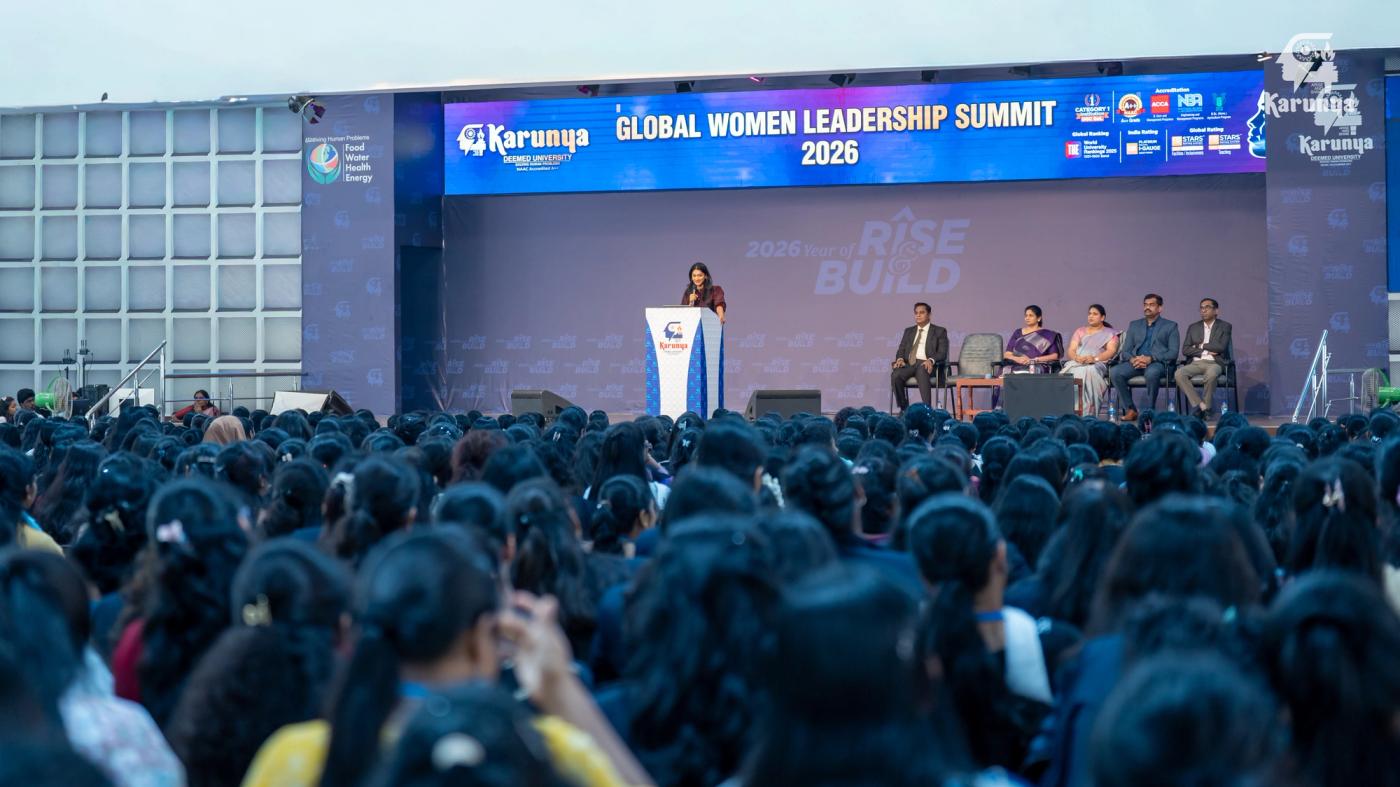
Ask a woman leader in corporate India how she wants to be remembered, and the answer rarely matches her official biography. The biography says "first woman to." The honest answer is usually something closer to: the person who made it easier for the next five women to not have to be a first. That gap, between how women leaders are actually remembered and how they want to be remembered, is one of the most under-discussed problems in Indian corporate life. It shapes who gets written about, who gets forgotten the moment they leave the room, and who spends their last years in a role fighting to be seen as more than a milestone.
This isn't a minor branding issue. It determines whether the work a leader spent twenty years building survives her exit, or evaporates the day her successor is announced.
The Narrative Women Leaders Actually Get
Look at how Indian business media covers women executives, and a pattern emerges fast. The coverage clusters around firsts and appointments: first woman CEO of a listed company, first woman on a particular board, first woman to head a particular vertical. These moments matter, and they deserve coverage. But the "first" framing has a shelf life. It is a headline about a threshold being crossed, not a story about what was built once she was through the door.
The scale of the underlying gap explains why the "first" framing still dominates. An analysis of India's listed companies by Prime Database found that the number of firms with a woman managing director or CEO rose sharply over six years, yet still accounted for only a small share of all listed companies. Most of that growth also came from within promoter families rather than from professional women rising through the ranks, which means the more common story is inheritance, not ascent. A separate analysis of the Nifty 500 found that nearly two-thirds of companies had no woman at all in a key managerial personnel role, and that women executive directors at the same level as their male peers were paid roughly 40 percent less. When representation itself is this scarce and this concentrated, the media narrative defaults to counting arrivals rather than describing what those women did once they arrived. There simply hasn't been enough volume, yet, for the coverage to move past the milestone.
The result is that many senior women in Indian corporates are remembered primarily as symbols of representation rather than as architects of outcomes. Their P&L turnarounds, the teams they rebuilt from scratch, the succession pipelines they quietly engineered over a decade, get a fraction of the column inches that their appointment announcement received. When they leave a role, the retrospective is often thinner than the introduction was.
Compare this to how legacy gets built and told for male executives in the same ecosystem. Their departures come with retrospectives on "the systems he built" or "the culture he left behind." Their names attach to strategies, turnarounds, and institutional shifts that outlive the announcement cycle. The asymmetry isn't usually deliberate. It is what happens when representation is treated as the whole story instead of the opening chapter, especially in an ecosystem where women CEOs still make up only a small single-digit percentage of large listed companies, even after several years of steady, well-covered progress.
What Women Leaders Actually Say They Want to Be Remembered For
When women in senior roles talk candidly about legacy, "first" almost never comes up unprompted. What comes up instead is a fairly consistent set of things: the people they promoted who wouldn't have been promoted otherwise, the decision-making culture they left behind, the systems that kept working after they walked out the door, and the younger women who stopped needing permission because of something they normalised.
This is a legacy built on transfer, not possession. It's less "look what I achieved" and more "look what continues without me." That distinction matters enormously, because it changes what counts as evidence of a life's work. A promotion is a moment. A pipeline of people you deliberately built into their next roles is a structure. Structures outlast headlines.
The founders and executives we've featured on the Dais describe this almost identically, whatever their industry. The thing they're proudest of is rarely the title. It's the org chart, two levels down, filled with people they hired, trained, or fought for. Women's leadership research backs this up directly: work on sponsorship in leadership pipelines shows that when women are sponsored into stretch roles rather than only mentored, they don't just get promoted faster, they describe a lasting shift in how they see their own legitimacy, one that they then tend to extend to the people they sponsor in turn. That is legacy in its purest, most mechanical form: one person's advancement quietly becoming the template for someone else's.
Why the "First" Narrative Becomes a Ceiling
The danger of the "first woman to" framing is that it quietly caps what comes next. If the story of your leadership is that you broke a barrier, the implicit expectation is that the barrier stays broken because you were exceptional, not because you changed anything structural. That leaves the door open for the next generation to face the same fight from scratch.
This is not a hypothetical risk. Corporate governance research on succession planning has found that succession pools built primarily on nominations from existing leaders tend to replicate the networks of those leaders, rather than widen them. In other words, if a woman's rise was treated as an exception rather than as evidence of a broader structural fix, the process that produced her is likely to produce another exception next, not a pattern. Deloitte's 2025 data on Indian organisations found that the vast majority actively develop identified successors, but the open question is whether that development reaches women and other underrepresented candidates with the same intentionality it reaches everyone else. A leader who is only ever described as a "first" has, in a strange way, been under-credited. She is treated as proof that the system can occasionally produce an exception, rather than as someone who redesigned a piece of the system.
The distinction is not academic. It decides whether the next woman in that seat inherits a foundation or starts over. Research on India's leadership pipeline puts a number on how steep that climb still is: women make up roughly half of entry-level hires but only a fraction of the C-suite, a gap that industry researchers describe as one that does not close on its own, but only through deliberate structural decisions at the board level.
This is also why so many accomplished women leaders describe a specific late-career frustration: watching coverage of their exit focus entirely on gender, as if two decades of decisions, restructurings, and mentorship had been incidental to the fact of their being a "first." They did not spend their careers trying to be a statistic. They spent it trying to be undeniable on the merits, and building something that would hold.
Building a Legacy That Survives Your Exit
A legacy that outlasts a tenure is rarely accidental. The leaders who manage it tend to do a small number of things deliberately, starting years before they plan to leave.
They build people, not just teams. There is a difference between managing a high-performing team and deliberately developing two or three people who could eventually sit in your chair. The first produces good quarters. The second produces succession. This is precisely the distinction researchers draw between mentorship and sponsorship: mentorship tells someone what to do differently, while sponsorship is a senior leader actively advocating for them in rooms they cannot yet enter. The latter is what actually moves people into position, and it is a deliberate, ongoing act, not a farewell gesture.
They document decisions, not just results. A P&L turnaround fades from memory once the next leader changes strategy. A documented framework for how decisions got made, what tradeoffs were weighed, and why, can keep shaping an organisation for years after the person who wrote it has moved on.
They make the culture explicit. Culture that lives only in a leader's personal presence dies the day she leaves. Culture that gets written into hiring criteria, review structures, and stated values has a chance of surviving a change in leadership. This matters more than it might seem, given how much of India's improvement on gender representation has come from compliance rather than conviction. A large share of NSE-listed companies now have at least one woman director largely because the Companies Act requires it, not because succession pipelines were redesigned around it. A leader who wants her legacy to outlast a regulatory requirement has to build something more durable than a compliance checkbox.
They correct the record while they're still in the room. Waiting for a retirement retrospective to shape the narrative is too late. The leaders who are remembered well tend to have spent years making sure that what gets attributed to them is what they actually built, not just the fact of their gender.
Pick one structural thing this year, a mentee, a documented process, a written-down value, that will still be standing five years after you've moved on.
Owning the Narrative Before Someone Else Writes It
Here is the uncomfortable truth: if a woman leader does not actively shape how her work gets told, the "first woman to" framing will fill the vacuum by default, because it is the easiest headline to write. Visibility is not vanity in this context. It is the difference between a legacy that gets recorded accurately and one that gets flattened into a single, well-worn sentence.
This is why speaking publicly about the substance of your work, not just your appointment, matters more than it seems to in the moment. A keynote about the operating model you rebuilt, a panel about the succession pipeline you engineered, a published point of view on the decisions that defined your tenure, these create a public record that outlasts a single congratulatory headline. They give journalists, boards, and the next generation of women something more accurate to reference than "she was the first."
The women who are remembered for what they built, rather than only for the door they walked through, are almost always the ones who talked about the building, not just the walking through. And the earlier a leader starts doing this, the more raw material there is for an accurate record by the time she exits. A single retrospective interview cannot reconstruct a decade of decisions. A decade of visible commentary can.
The Bottom Line
The gap between how women leaders in corporate India are remembered and how they want to be remembered is not going to close on its own. Representation coverage will keep defaulting to firsts, because it is the simplest story available, and because the raw numbers behind that story are still genuinely small. Closing that gap is deliberate work: build successors, document decisions, make culture explicit, and talk publicly about the substance of what you built, not only the milestone of having arrived.
If you're a woman leader who wants to be known for what you built rather than only the door you walked through, list yourself on Draupadi on the Dais, India's premier speaker platform for credible professional women, and start shaping the record while you're still writing it.