I Protected My Credibility. Militantly.
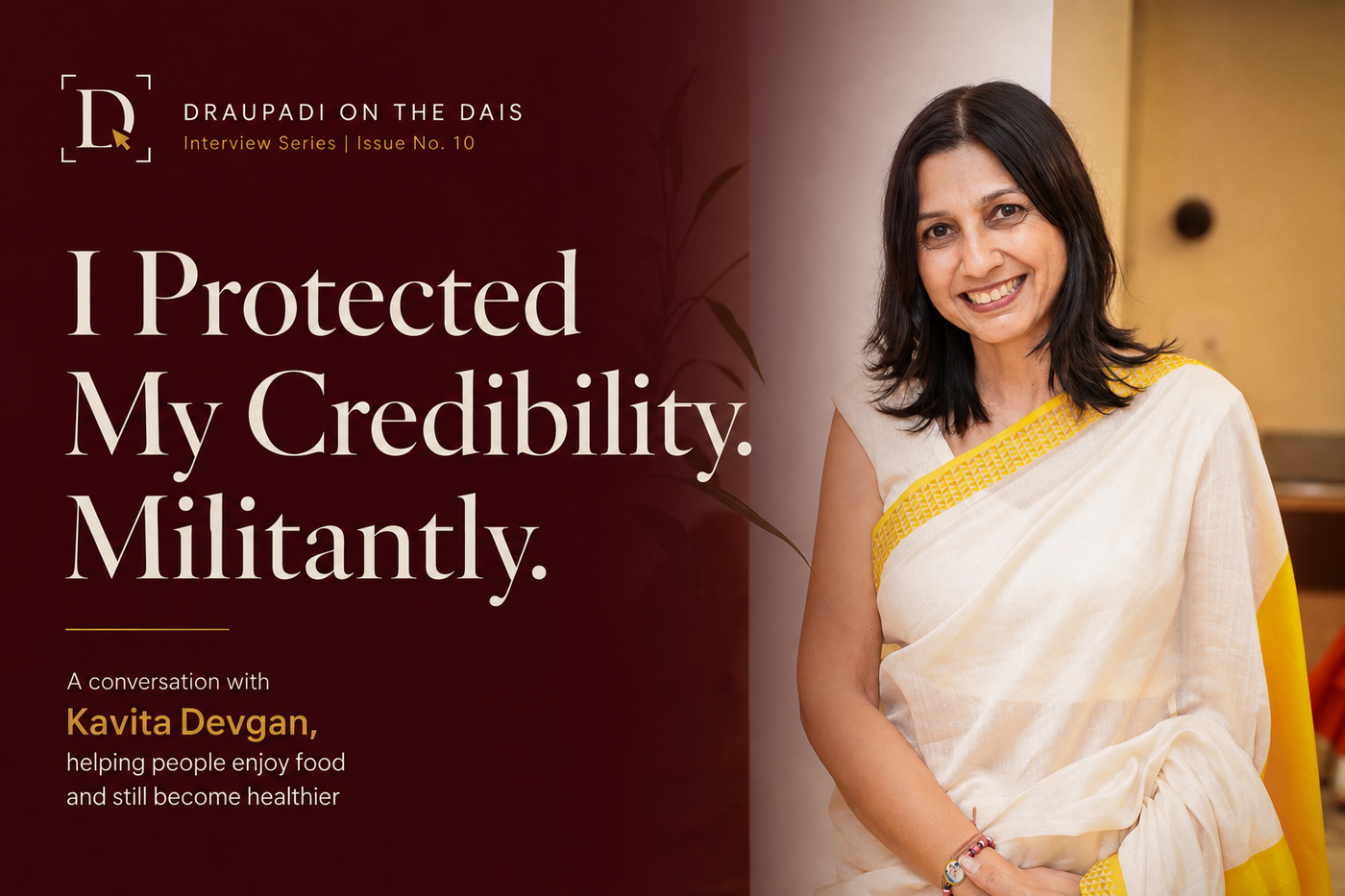
Kavita Devgan is a nutrition and wellness consultant, speaker, and author of six books including Don’t Diet, The Immunity Diet, and Fix It With Foods. She has been a practising nutritionist and freelance health writer for over 30 years, contributing to HT Brunch, Mint, Business Standard, Quint, DailyO, Femina, Cosmopolitan, National Geographic Traveller, The Pioneer and Outlook Traveller, among others.
I Stopped Trying to Sound Like a Nutritionist and Started Sounding Like Myself
Q1. You have built real expertise in a specific area over a long time. When did the work start feeling like yours, not just something you were doing?
I don’t think there was one defining moment. It happened very quietly.
In the beginning, I was doing what everyone does. You study, you read, you learn the science, you try to help people. But somewhere along the way, I stopped trying to sound like a nutritionist and started sounding like myself.
I realised I wasn’t interested in telling people what they couldn’t eat. I was much more interested in helping them enjoy food and still become healthier. That’s when my work started feeling like mine.
Even today, if a piece of advice feels restrictive or fear-based, it doesn’t sit well with me. I keep coming back to the same question: “How can I make this simpler, kinder, and easier for someone to actually live with?” That’s probably the thread that has stayed constant through my work.
Thinking
Q2. There is usually work that happens with no name on it, no metric attached, and that most people around you probably do not notice. What is the most important thing you do that fits that description?
Thinking.
That sounds like a strange answer, but it’s true.
I spend a lot of time thinking about why something isn’t working for a client. Sometimes it’s not the food at all. It’s their routine, their stress, their family dynamics, their sleep, or simply the fact that they’ve been made to feel guilty about eating.
I also spend hours reading research, questioning it, connecting ideas from different places and translating all of that into advice that feels practical. Nobody sees those hours. They only see the final post, the interview or the consultation.
We Just Need to Eat Our Dal, Vegetables, and Roti a Little More Mindfully
Q3. What is the most widely held belief in your field that you quietly, or not so quietly, disagree with?
That nutrition has to be extreme to work.
We’ve somehow created this culture where the louder the advice, the more believable it seems. Cut carbs. Quit sugar forever. Never eat fruit. Only eat this. Never eat that.
I don’t believe health works like that.
Most of the healthiest people I know don’t obsess over food. They simply have good habits that they’ve repeated for years. My entire practice is built on habit changes. And all my writing, books, columns, insta scripts, all focus on this.
Also I think traditional wisdom is underrated. We don’t always need a new superfood. Sometimes we just need to eat our dal, vegetables, and roti a little more mindfully.
More Comfortable Doing the Work Than Talking About the Work
Q4. There is a kind of credibility that accumulates quietly, through work done over years, that still does not translate into the right invitations. Where do you think that gap lives?
I think we live in a time where visibility often moves faster than credibility.
The people doing solid work aren’t always the loudest people in the room. And sometimes those of us who’ve spent years building expertise underestimate how important it is to also tell our own story.
I’ve probably been guilty of that myself.
I was always more comfortable doing the work than talking about the work. I’m learning that the two aren’t opposites. If you don’t communicate your value, people can’t always see it.
Remembered for Saying Something Useful When Someone Needed It
Q5. There is a version of visibility that requires performance, constant output, constant presence. And there is another version that is just being findable in the right places. How do you think about the difference?
I don’t think I can, or even want to, compete on volume.
There will always be someone posting more often or speaking louder.
I’d rather build something people come back to because they trust it.
For me, visibility isn’t about showing up everywhere. It’s about being remembered for saying something useful when someone needed it.
I’d much rather have someone save a post and use it six months later than get thousands of views that disappear by tomorrow.
Quietly Excellent
Q6. Who were the women you watched build careers before you? What did they teach you that they probably did not know they were teaching?
Honestly, I learnt something from many women rather than one person.
I watched women who balanced work with family responsibilities without making either look like a burden. I watched women who stayed consistent even when nobody was applauding them. And I watched women who were quietly excellent at what they did.
I think what stayed with me wasn’t ambition as much as resilience.
The ability to keep showing up, to keep learning, to keep doing good work even when recognition comes slowly. That's something I've carried with me
I Protected My Credibility. Militantly.
Q7. Five years from now, you are in a conversation with someone whose judgment you trust. Not a performance review, just an honest conversation. What do you want to be able to say about this period?
I’d like to say that I didn’t chase every trend.
That I protected my credibility. Militantly.
That I reached more people without becoming a different version of myself.
And that I made nutrition feel a little less confusing for a lot more people.
Success, for me, isn’t just a bigger audience. It’s knowing that because of something I shared, someone stopped fearing food, cooked one more meal at home, or felt healthier without feeling deprived.
If I can honestly say that happened, I’ll feel this period was well spent.
Kavita Devgan is a nutrition and wellness consultant and author of Six books. This interview was conducted as part of the Draupadi on the Dais Interview Series.