Top Women Legal and Policy Voices Worth a Panel Seat

India's legal and policy conversations shape everything from how markets are regulated to how rights are interpreted, yet the panels convened to discuss them still lean heavily male. This list looks past the usual rotation of names to surface women whose work sits at the center of that conversation: senior advocates who've argued landmark constitutional cases, regulators who've reshaped how institutions function, and policy scholars whose research sets the terms of public debate. Every entry here has a documented body of work, a track record of public commentary, and specific expertise that would sharpen any panel on law, governance, or regulation. None are sourced from the Dais directory yet, since verified profiles are still going live, so treat this as a starting shortlist for your own outreach and diligence.
1. Indira Jaising
Senior Advocate, Supreme Court of India; Co-founder, Lawyers Collective
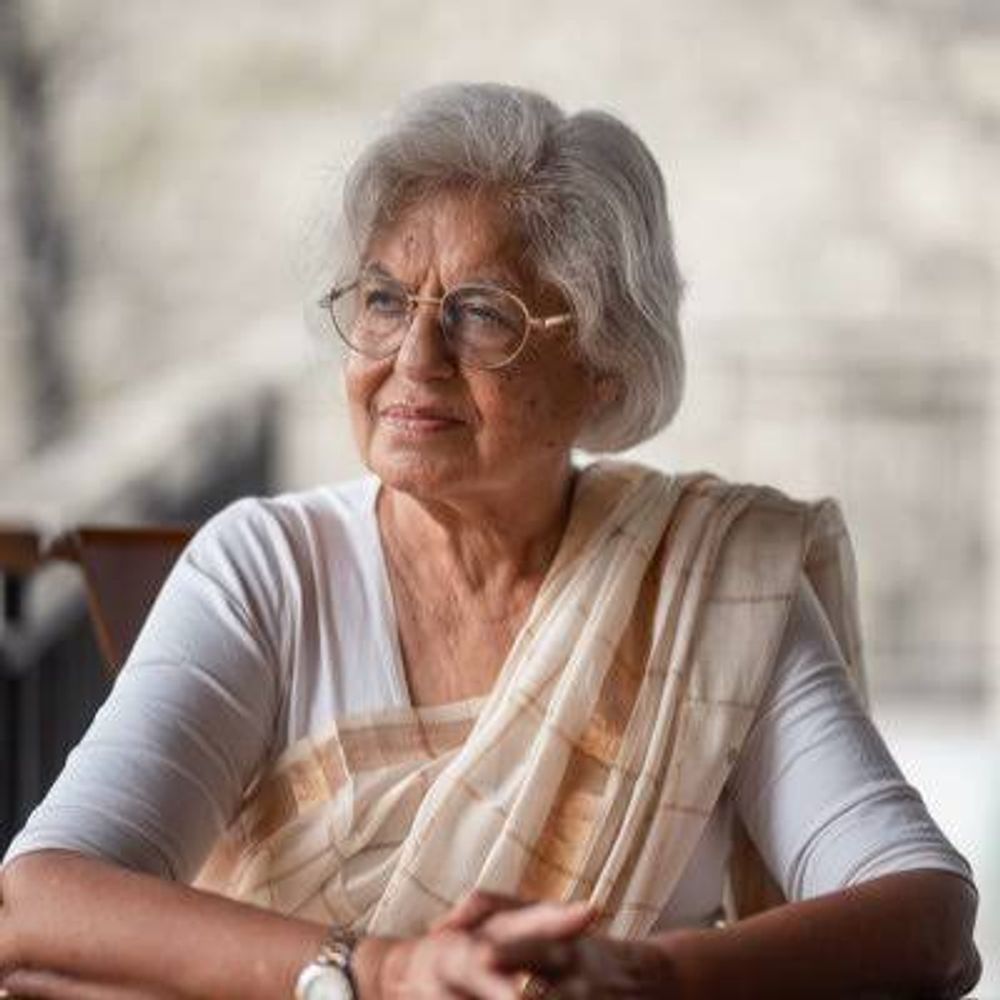
Indira Jaising became the first woman appointed Additional Solicitor General of India, a position she has held twice, and has spent over four decades building case law on gender justice and human rights before the Supreme Court. Her work reshaped how Indian courts approach questions of workplace harassment, matrimonial property rights, and custodial violence, at a time when few precedents existed to draw on. She speaks on constitutional interpretation, gender justice jurisprudence, judicial independence, human rights litigation strategy, and the regulation of civil society organizations under India's foreign funding laws. What distinguishes her from other constitutional voices on this list is her dual vantage point: decades inside government as a law officer and decades outside it as a litigator challenging the state, giving her commentary a rare structural honesty about how legal reform actually gets stalled or pushed through.
Connect with her here.
2. Menaka Guruswamy
Senior Advocate, Supreme Court of India
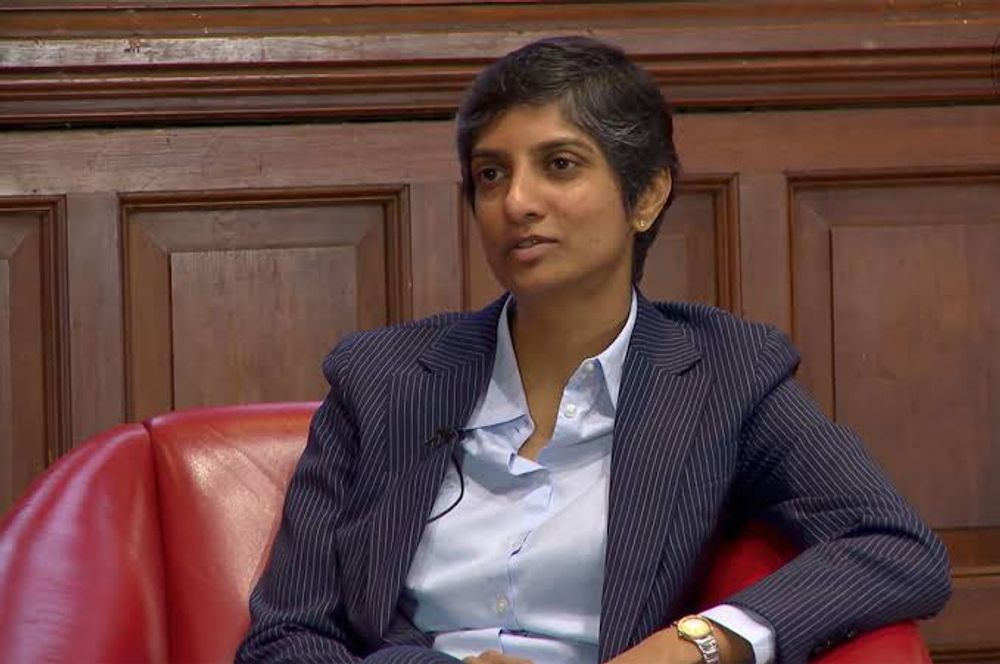
Menaka Guruswamy was part of the legal team that argued Navtej Singh Johar v. Union of India, the 2018 Supreme Court case that decriminalized consensual same-sex relationships by reading down Section 377 of the Indian Penal Code. Beyond that single case, her practice has consistently pushed courts to treat privacy, dignity, and equality as connected constitutional guarantees rather than separate legal categories, which has influenced how later cases on personal liberty have been framed. She speaks on constitutional law and democracy, LGBTQ+ rights litigation, the right to privacy, judicial reasoning in rights-based cases, and legal education reform, drawing on her parallel role teaching at law schools in India and abroad. Her distinct angle is the classroom-to-courtroom throughline: she treats litigation and legal pedagogy as the same project, which makes her especially compelling for panels bridging law and higher education.
Connect with her here.
3. Madhabi Puri Buch
Former Chairperson, Securities and Exchange Board of India
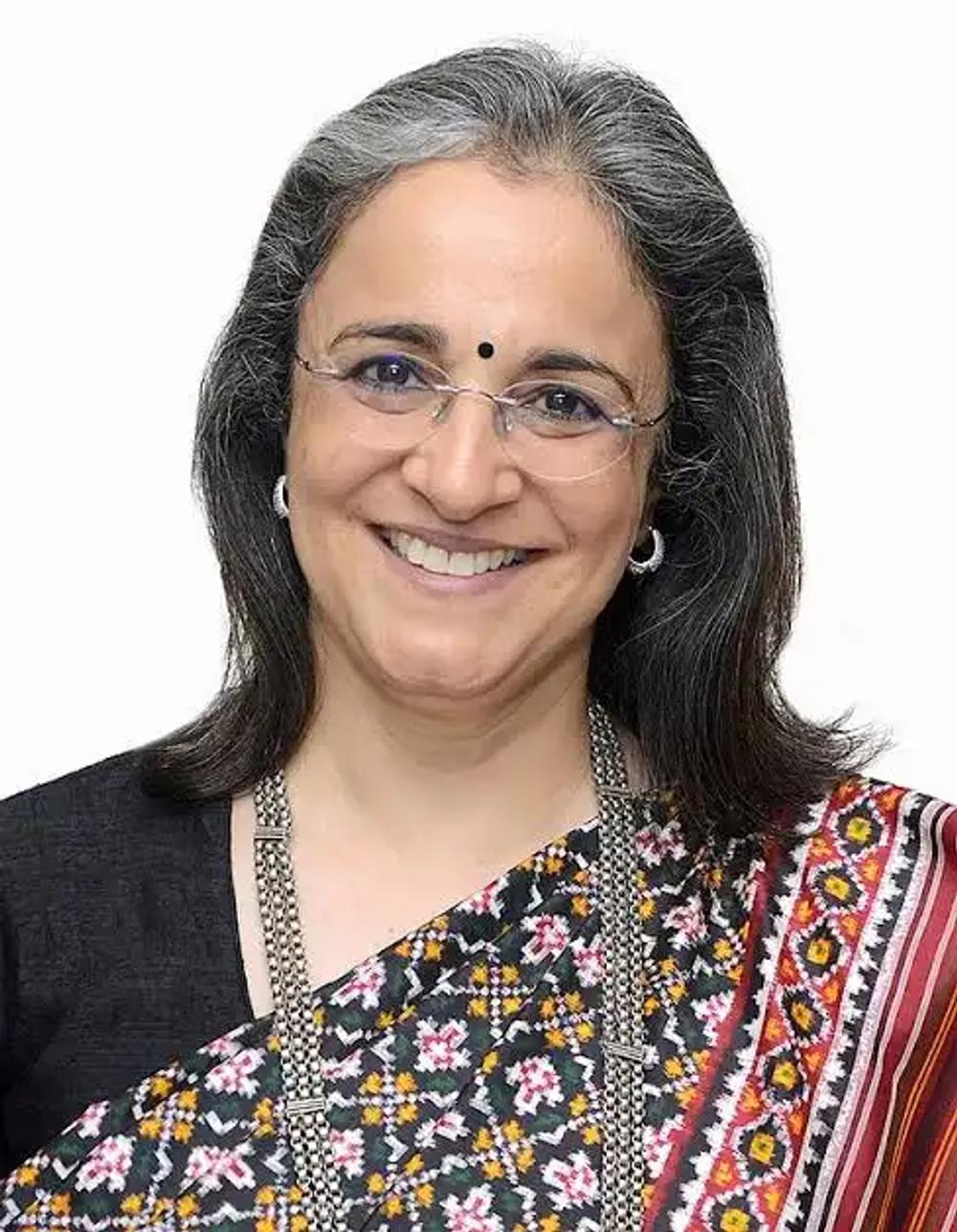
Madhabi Puri Buch was appointed Chairperson of SEBI in March 2022, becoming the first woman and the first person from the private sector to head India's capital markets regulator, a three-year term she completed in February 2025. During her tenure she oversaw regulation of a market ecosystem that grew to trillions of dollars in value, and pushed changes to disclosure norms, mutual fund oversight, and market surveillance that reshaped how retail investors and institutions interact with Indian exchanges. She speaks on capital markets regulation, investor protection, fintech and market infrastructure, regulatory independence, and the balance between growth and oversight in fast-scaling financial systems. Her angle is distinct from academic or advocacy voices on this list: she has sat inside the regulator's chair and made the calls, which gives her commentary an operator's specificity that theory alone can't replicate.
Connect with her here.
4. Yamini Aiyar
Public Policy Scholar; former President and Chief Executive, Centre for Policy Research
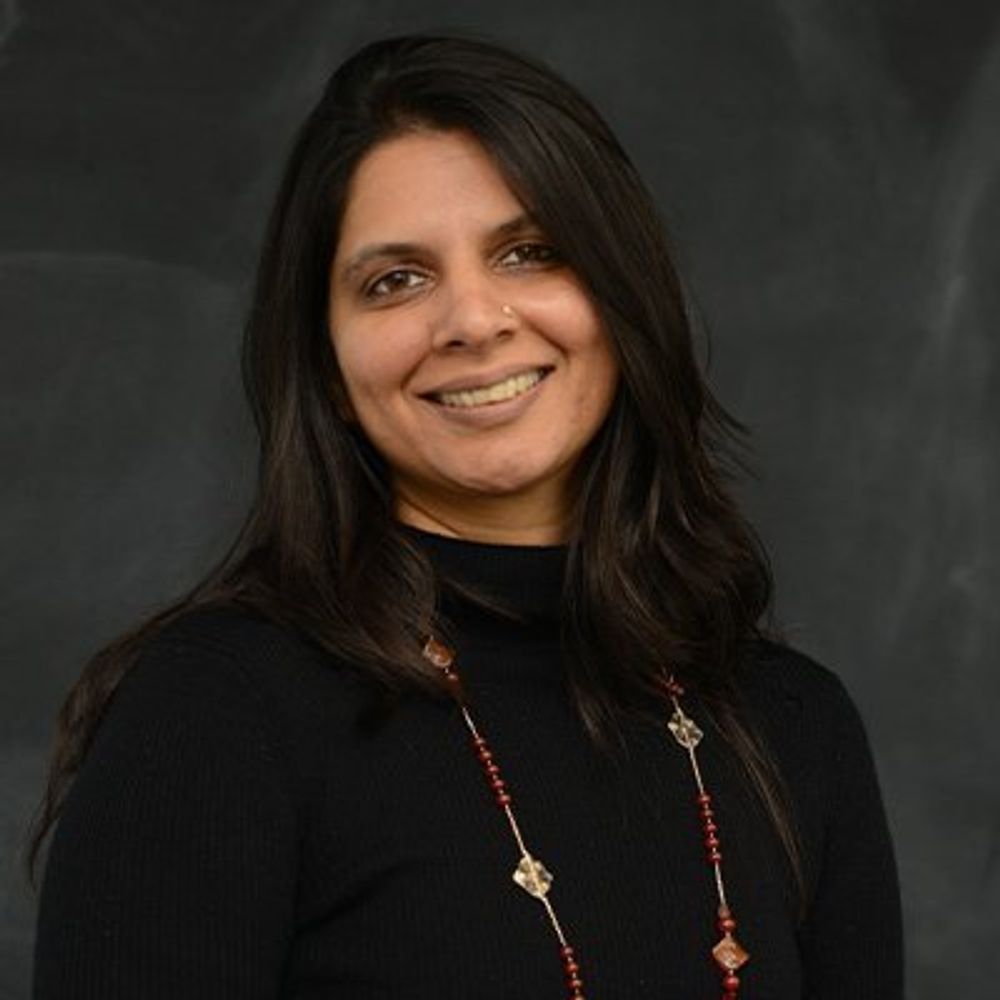
Yamini Aiyar led the Centre for Policy Research, one of India's most influential independent think tanks, from 2017 to 2024, after founding its Accountability Initiative in 2008 to track how government spending on schemes like elementary education actually reaches citizens. That expenditure-tracking work became a reference point for how researchers and journalists assess the gap between policy announcements and implementation on the ground. She now holds fellowships at Brown University's Watson Institute and the Centre for Social and Economic Progress, and speaks on state capacity, federalism, welfare policy design, governance reform, and the politics of public expenditure. Her distinct angle is implementation over intention: where many policy commentators focus on what a scheme promises, she focuses on what happens between the budget line and the beneficiary, a gap she has spent nearly two decades documenting.
Connect with her here.
5. Vrinda Grover
Advocate, Supreme Court and Delhi High Court
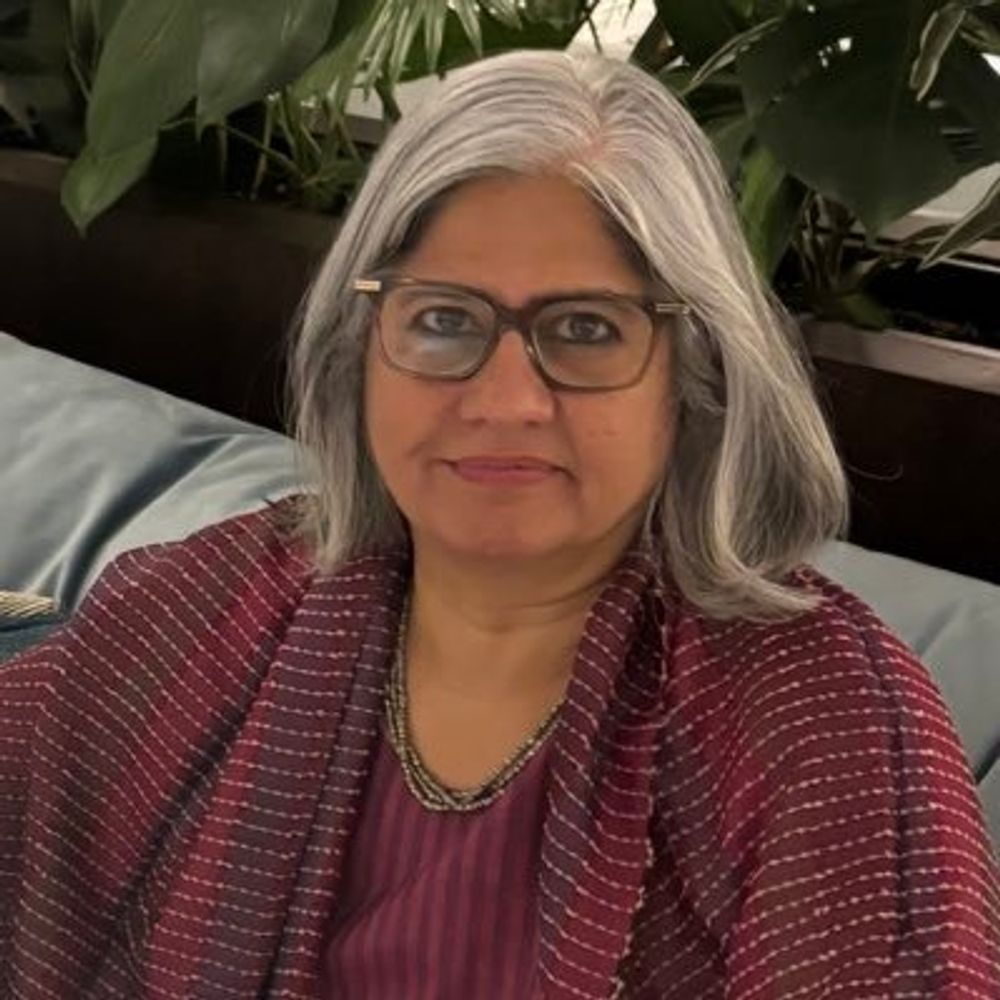
Vrinda Grover has built a legal practice representing survivors and victims' families in cases involving gender-based violence, custodial deaths, and communal violence, often taking on matters that larger firms decline because they involve the state as a defendant. Her interventions have shaped how Indian courts handle evidence and testimony in cases of sexual violence, including work that influenced procedural safeguards for survivors giving testimony against powerful defendants. She speaks on gender-based violence law, custodial justice, communal violence accountability, criminal procedure reform, and the intersection of caste, religion, and access to justice. What sets her apart on this list is her sustained focus on cases against the state itself, giving her a distinct vantage on the limits of legal remedy when the institution being challenged is also the one enforcing the law.
Connect with her here.
6. Sunita Narain
Director General, Centre for Science and Environment
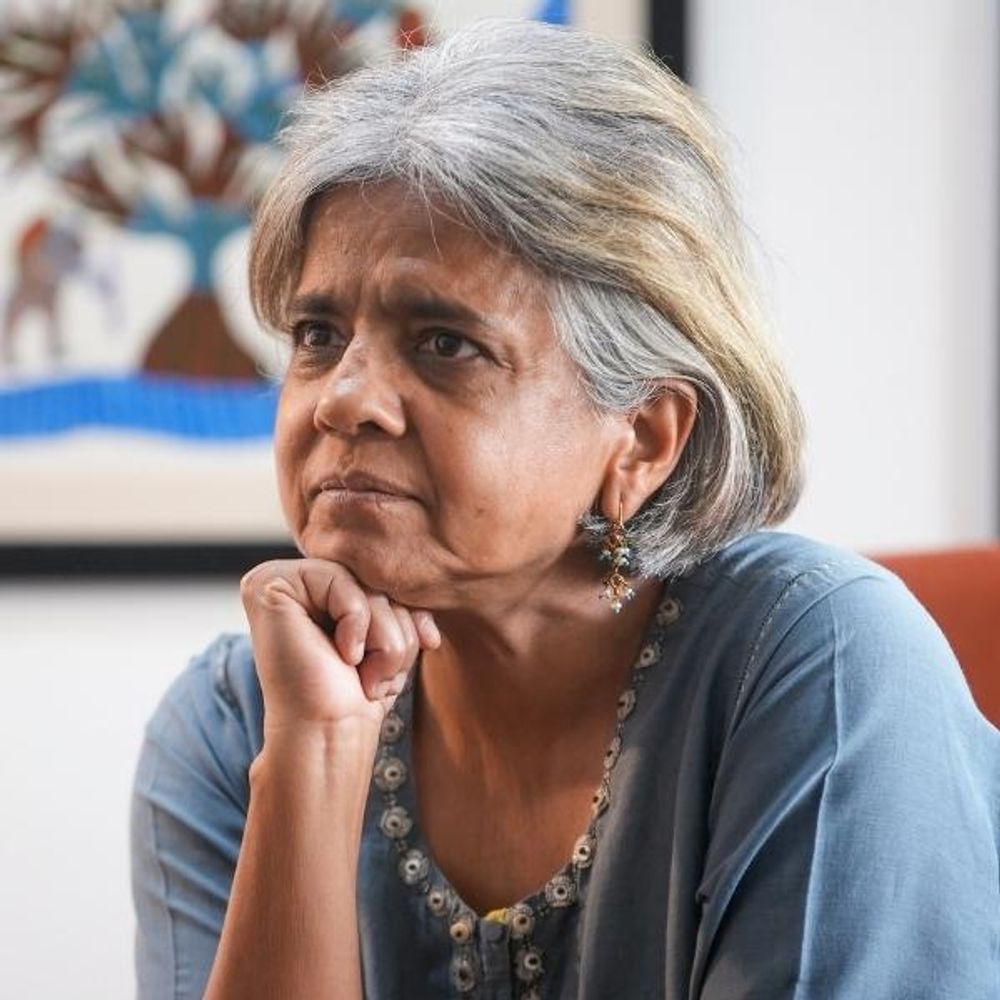
Sunita Narain has led the Centre for Science and Environment for over three decades, turning it into one of the most cited sources shaping India's environmental policy on air pollution, water management, and climate regulation. Her research and advocacy were central to Delhi's shift to CNG for public transport in the early 2000s, a policy fight that became a template for how environmental science can be translated into enforceable regulation. She speaks on climate policy and India's net-zero commitments, air quality regulation, water governance, environmental law enforcement, and the tension between industrial growth and ecological limits. Her angle is distinct from most legal or economic voices on this list because her authority comes from data and field research first, with policy recommendations built on measured environmental outcomes rather than legal theory alone.
Connect with her here.
7. Ashima Goyal
Economist; former External Member, RBI Monetary Policy Committee
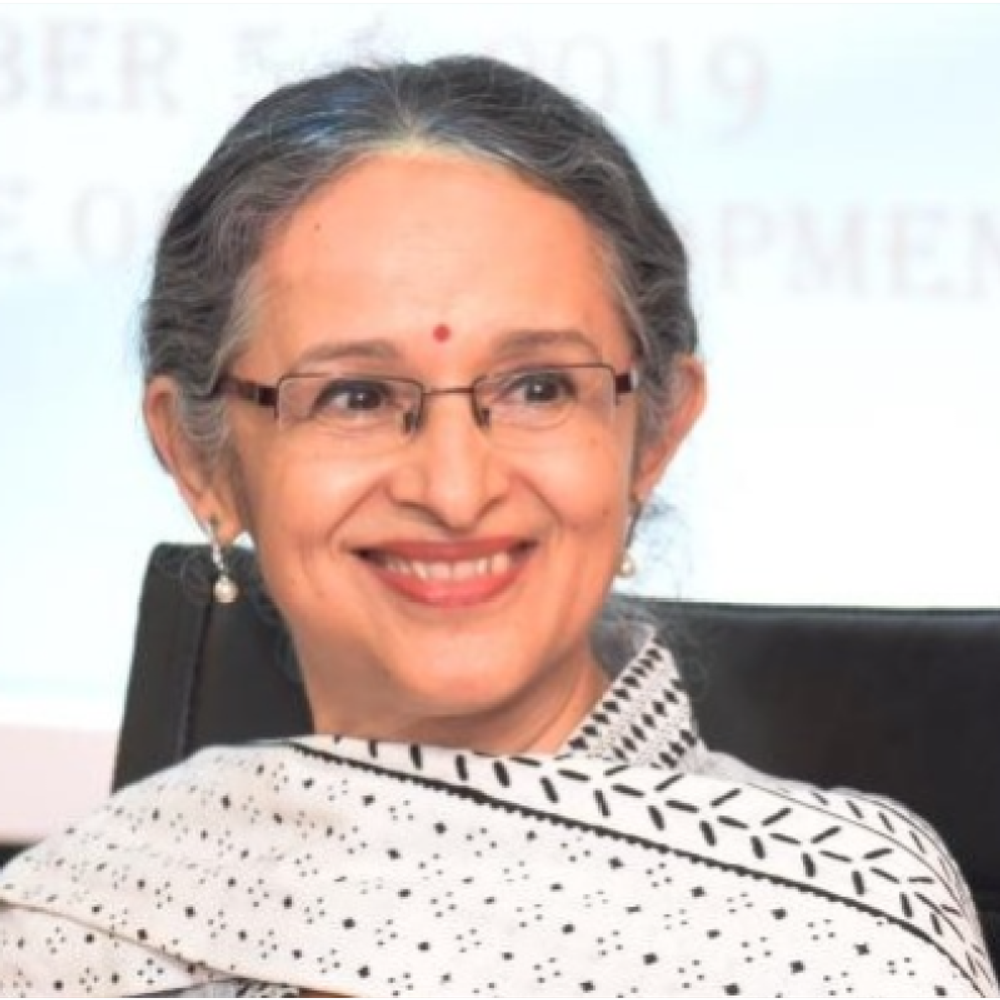
Ashima Goyal served on the Reserve Bank of India's Monetary Policy Committee, the six-member body that sets India's interest rates, through a period that included pandemic-era rate cuts and the inflation-driven hikes that followed. Her published research arguing that recent Indian inflation has been substantially supply-driven rather than demand-driven shaped part of the public debate over how aggressively the RBI should raise rates. She now holds an emeritus position at the Indira Gandhi Institute of Development Research and speaks on monetary policy transmission, inflation targeting, central bank independence, financial regulation, and macroeconomic policy for emerging markets. Her distinct angle is the insider's dissent: she has a public record of voting differently from RBI consensus on specific rate decisions, which makes her unusually candid about where India's monetary policy framework has actual disagreement built in.
Connect with her here.
8. Karuna Nundy
Advocate, Supreme Court of India

Karuna Nundy has built a practice and public profile around law reform following some of India's most consequential moments for gender justice, including work connected to strengthening criminal law on sexual violence and representing free speech cases that test the boundaries of India's defamation and hate speech statutes. She's also one of the more visible legal commentators in Indian media, regularly called on to explain how a court ruling or proposed bill will actually function once it leaves the legislature. She speaks on criminal law reform for sexual violence, free speech and defamation law, media law, constitutional rights in the digital age, and how legislative drafting translates into courtroom outcomes. Her distinct angle is translation itself: she operates as fluently in front of a camera explaining a judgment as she does arguing one, making her one of the few names on this list built for both the courtroom and the panel stage.
Connect with her here.
About Draupadi on the Dais
Draupadi on the Dais connects accomplished Indian women experts with the panels, media, and platforms built to find them. We built the Dais because visibility in India's expert economy still runs on who organizers already know, and that list is too often the same five names. Our directory is searchable by industry, expertise, city, and appearance type, built for producers, moderators, and event teams who want their next panel to reflect who's actually doing the work, not just who's easiest to Google. Claim the Dais. Follow us here.
Looking for more speakers? Talk to us directly. Request a Speaker →